U.S. Central Command Establishes Middle Eastern Air Defense Combined Operations Cell in Qatar

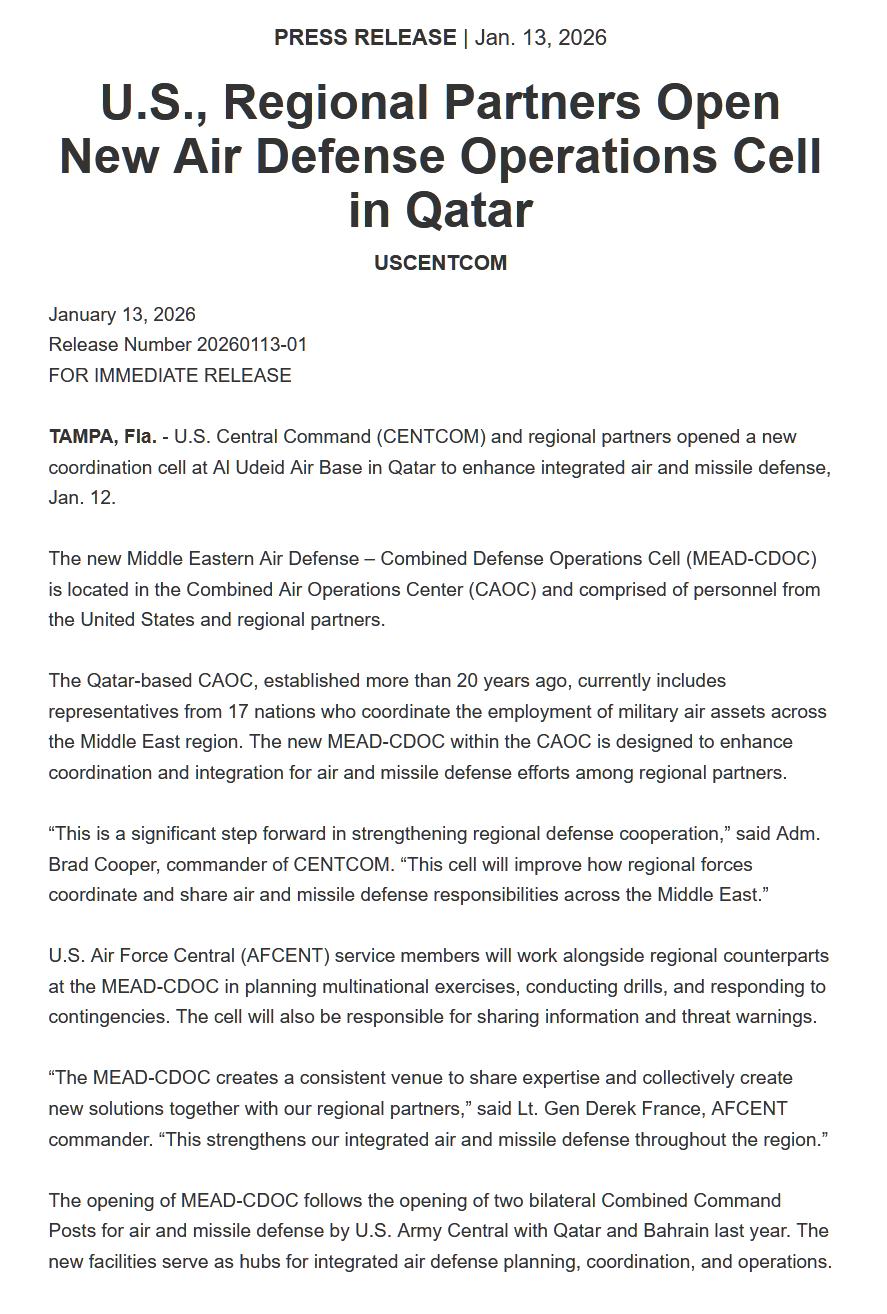
MIDDLE EAST - U.S. Central Command, in coordination with regional partners, established the Middle Eastern Air Defense Combined Operations Cell at Al Udeid Air Base on January 12.
This initiative integrates personnel from the United States and regional nations to coordinate air and missile defense activities.
The cell operates within the Combined Air Operations Center, which has facilitated multinational air asset coordination for over two decades. Seventeen nations currently participate in the Combined Air Operations Center, contributing to regional defense efforts.
The establishment of this cell represents a structured approach to sharing information and addressing aerial threats. The Combined Air Operations Center, based in Qatar, serves as the primary hub for coordinating military air operations across the Middle East.
Established more than 20 years ago, it includes representatives from 17 nations responsible for managing air asset employment. The integration of the new cell within this center aims to streamline defense coordination among participants.
Personnel from U.S. Air Force Central will collaborate with regional counterparts in planning exercises and responding to contingencies. This setup facilitates the exchange of threat warnings and operational data.
The new cell builds upon prior bilateral initiatives, including combined command posts established with Qatar and Bahrain in the previous year.
These facilities function as centers for air defense planning and operations. The expansion to a multilateral framework involves additional partners in defense integration.
U.S. military officials have indicated that this development enhances collective response capabilities. Regional cooperation in this domain addresses shared security concerns in the area.
Purpose and Establishment of the Middle Eastern Air Defense Combined Operations Cell
The Middle Eastern Air Defense Combined Operations Cell, abbreviated as MEAD-CDOC, is a coordination hub established by U.S. Central Command in partnership with regional nations at Al Udeid Air Base in Qatar.
📢 Ad Placement (In-Article)This will show as an actual ad on the public site
This cell integrates personnel from the United States and allied countries to facilitate joint air and missile defense activities. It operates within the existing Combined Air Operations Center, which coordinates multinational air operations and includes representatives from 17 nations.
The MEAD-CDOC provides a dedicated venue for sharing expertise, threat warnings, and operational data, while supporting planning for exercises and contingency responses.
The primary function of the MEAD-CDOC is to enhance integrated air and missile defense capabilities across the Middle East. It enables more effective collaboration among participants by streamlining information exchange and collective problem-solving.
This setup addresses aerial threats through coordinated mechanisms, building on prior bilateral command posts established with Qatar and Bahrain in 2025.
The establishment of the MEAD-CDOC responds to ongoing regional security challenges, including missile proliferation and asymmetric threats documented in official military assessments.
Government and defense department analyses indicate that such multilateral integration reduces vulnerabilities in air defense networks and improves response times.
This initiative reflects a strategic shift toward broader cooperation to maintain stability amid documented concerns over aerial risks.
Strategic Assessment
The establishment of the cell aligns with ongoing efforts to bolster integrated defense systems in the region. Government assessments indicate a focus on countering aerial threats through coordinated mechanisms.
Projections based on official data suggest potential improvements in response times and information sharing among participants. Historical precedents, such as the bilateral posts, demonstrate incremental progress in multinational defense collaboration. Future developments may involve expanded exercises to test interoperability.
The initiative occurs amid regional security dynamics, including missile proliferation concerns documented in military reports. Official analyses highlight the role of such cells in mitigating risks associated with asymmetric threats.
Data from defense departments support the projection that enhanced coordination could reduce vulnerabilities in air defense networks. Academic studies on regional alliances corroborate the value of integrated operations in maintaining stability.
📢 Ad Placement (In-Article)This will show as an actual ad on the public site
Full Report & Analysis
The full report includes expert analysis and risk assessment.
Full Report & Analysis →