Emergency Preparedness Guide
Readiness assessment and supply guidance based on current threat conditions.
Guidance is sourced from FEMA, Ready.gov, CDC, EPA, and verified government emergency management publications. This page provides preparedness information, not product endorsements.
Food & Water Storage
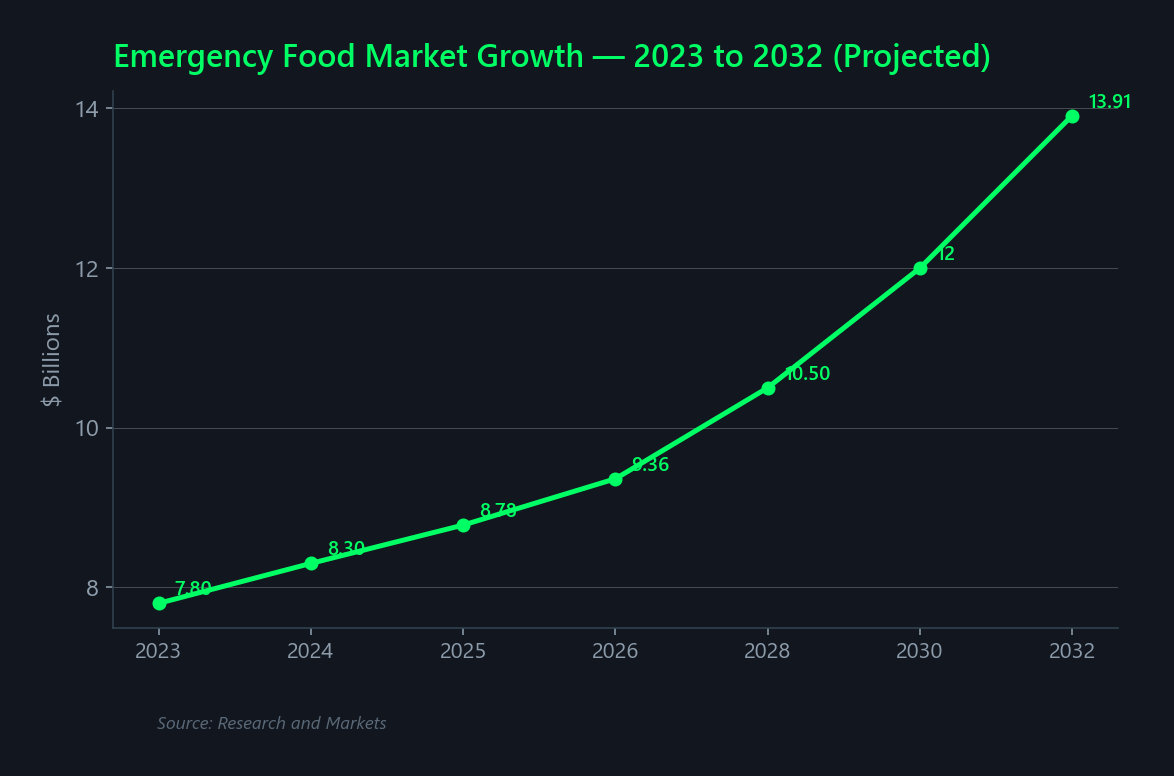
Emergency preparedness agencies worldwide recommend maintaining household supply reserves. The global emergency food market reached $8.78 billion in 2025 and is projected to hit $13.91 billion by 2032, reflecting sustained demand across North America, Europe, and Asia-Pacific. In the United States, Ready.gov recommends a minimum 72-hour supply kit. Extending to 30 days is advisable at elevated threat levels. The CDC recommends a two-week water supply as a practical target: 14 gallons per person minimum. European civil defense agencies - including Germany's BBK and Sweden's MSB - have issued similar guidance, with Sweden distributing its "If Crisis or War Comes" pamphlet to all 5 million households.
Water Supply
One gallon per person per day for drinking and sanitation. CDC recommends a two-week supply where possible (14 gallons per person). Normally active adults need approximately three-quarters of a gallon of fluid daily - more in hot climates or for children, nursing mothers, and sick individuals. A household water storage and purification setup costs $150 to $400 depending on capacity - a one-time investment that eliminates reliance on municipal supply during disruptions.
Water Purification
EPA emergency disinfection methods (updated February 2026): rolling boil for one minute (three minutes above 5,000 feet according to EPA guidelines), or unscented liquid chlorine bleach at 6-8.25% sodium hypochlorite concentration. Both methods kill most disease-causing microorganisms in untreated water.
Food Storage
Shelf-stable, non-perishable food with a manual can opener. Freeze-dried and dehydrated food storage is among the fastest-growing segments in the emergency food market. Rotate stock every 6-12 months. Include high-calorie, nutrient-dense options that require minimal or no cooking.
Power & Communications
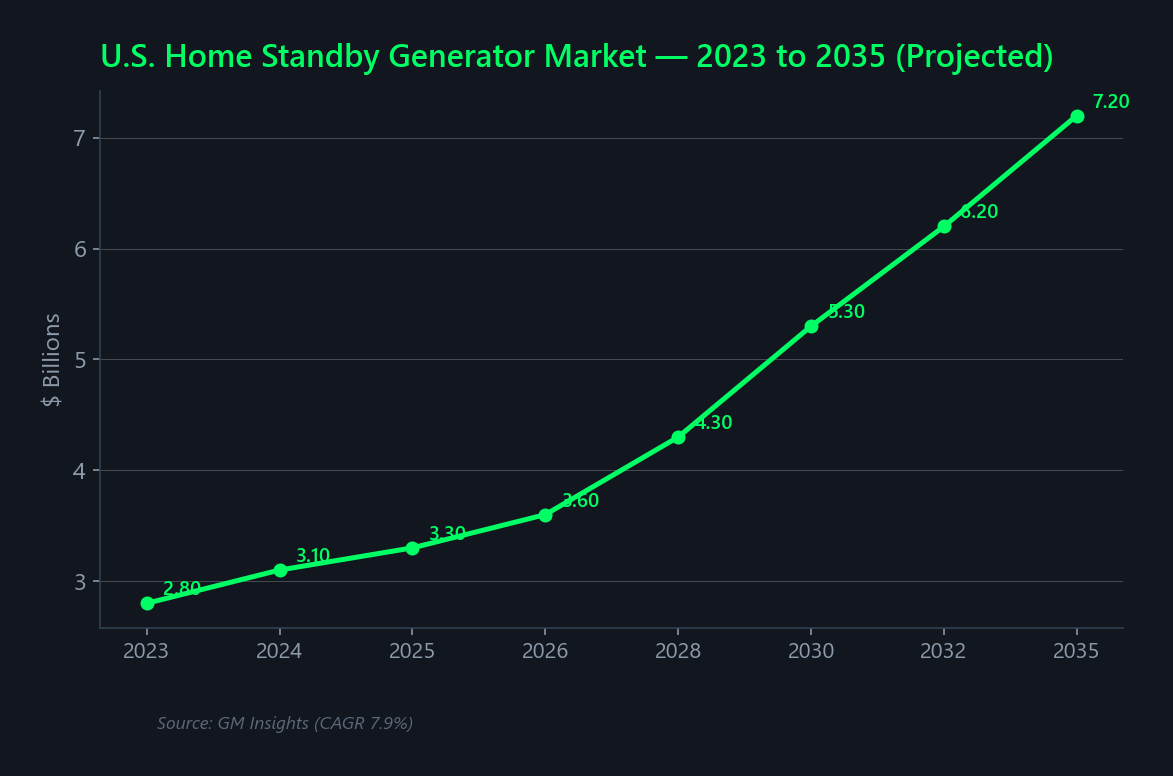
Power grid resilience is a global concern as extreme weather and cyber threats increase. The International Energy Agency reports that weather-related outages have doubled globally since 2000. In the United States, electricity customers averaged nearly 11 hours of power interruptions in 2024 according to EIA data, the most in a decade. Major events such as Hurricanes Beryl, Helene, and Milton drove about 80 percent of those hours, with major-event outages alone averaging nearly nine hours, more than double the 2014-2023 average. European grids face similar risks, with the 2024 European Network of Transmission System Operators report flagging increasing cross-border cascading failure risks. The global home standby generator market is projected to reach $7.2 billion by 2035, with the U.S. market valued at $3.3 billion in 2025.
Backup Power
A portable solar generator covers essential electronics without fuel dependency. Home standby generators (natural gas or propane) provide whole-house coverage. Over 40 GW of battery energy storage capacity is now installed on the U.S. grid. Personal battery banks should cover 72 hours of phone and radio charging. Portable solar generators range from $200 to $2,000 depending on wattage, while whole-home standby units run $5,000 to $15,000 installed - many homeowner insurance policies offer premium discounts for backup power systems.
Emergency Radio
FEMA lists a battery-powered or hand-crank NOAA Weather Radio with tone alert as a basic kit item. NOAA broadcasts continuous weather and emergency information 24/7 on frequencies 162.400-162.550 MHz. During the 2025 Texas ice storm, ham operators with go-kits maintained communications when local infrastructure collapsed. A basic emergency communications kit (NOAA radio, battery bank, solar charger) costs $75 to $150 and requires no subscription fees or cellular infrastructure to operate.
Grid Vulnerabilities
A 2025 study found 35,000 exposed solar devices from 42 vendors worldwide, with 93 vulnerabilities across 17 manufacturers - one-third severe enough for full system control. Rogue communication devices were found in U.S. solar inverters and batteries, allowing potential remote access to cut power. The Edison Electric Institute estimates $140 billion in grid hardening investment is needed by 2030 to address both physical and cyber vulnerabilities across the U.S. power infrastructure.
Nuclear Preparedness
Ready.gov's core guidance for a nuclear event: get inside, stay inside, stay tuned. After detonation, there are approximately 10 or more minutes to find adequate shelter before fallout arrives. The best shelter is brick or concrete - basements, parking garages, subways. Remain in the most protective location for the first 24 hours unless threatened by immediate hazard.
Potassium Iodide (KI)
FDA-approved thyroid-blocking agent for radiation emergencies. The KI radiation tablet market reached $27.2 million in 2025, projected to hit $44.6 million by 2032 (CAGR 8.9%). Following the 2022 Ukraine escalation, some suppliers reported KI sales increases of over 500% in a single week. Federal policy: stockpile and distribute to emergency workers within the 10-mile Emergency Planning Zone. A household supply of FDA-approved KI tablets costs $12 to $25 and has a shelf life of 7-10 years when stored properly.
Shelter Strategy
Dense material shields from radiation - concrete, brick, earth. A basement offers significant protection. Interior rooms with no windows on the lowest floor are second-best. FEMA's 72-hour nuclear detonation response guidance recommends sheltering for at least 24 hours, then following official instructions for evacuation or continued shelter.
Protection Equipment
Nuclear/biological/chemical-rated respiratory protection (N95 minimum, full-face respirator preferred). Sealed plastic sheeting and duct tape for room sealing. Protective clothing covering all exposed skin. Decontamination supplies: soap, water, clean clothing changes. A battery-powered radio is critical for receiving official shelter or evacuation instructions.
Financial Readiness
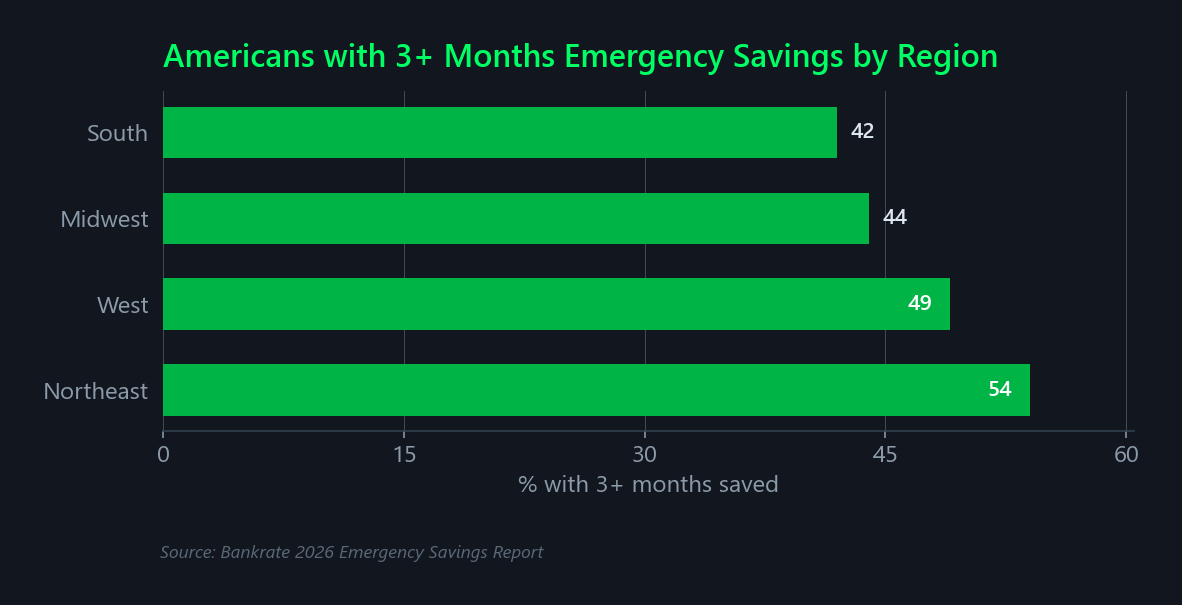
Financial resilience remains strained globally as inflation compounds across economies. OECD data shows real household income growth has slowed sharply, with the U.K. and Germany posting declines in early 2025 while broader OECD growth fell to 0.1%. In the United States, Bankrate's 2026 Emergency Savings Report found 53% of Americans cannot afford a $1,000 emergency expense. Consumer prices are approximately 29.6% higher than December 2019 according to BLS Consumer Price Index data, making emergency fund maintenance increasingly difficult.
Cash & Liquidity
The Federal Reserve's report on the economic well-being of U.S. households in 2025 found 63% would cover a $400 emergency exclusively with cash or its equivalent. 30% could not cover three months of expenses by any means. Maintain 30-90 days of essential expenses in accessible accounts. Keep physical cash - ATM networks and digital payment systems can be disrupted by cyberattacks. FDIC-insured high-yield savings accounts offer around 3.8 to 4.2% APY, allowing emergency reserves to generate income while maintaining full federal deposit protection up to $250,000.
Insurance Review
The 2024 FEMA survey found 87% of homeowners had insurance, but only 43% of renters. Review homeowner, auto, and health coverage for conflict-related exclusions. Confirm flood and disaster riders are active. Document all assets with photos stored off-site or in encrypted cloud storage. Renters insurance covers personal property that homeowner policies do not. Renters insurance averages $15 to $20/month and typically includes liability coverage and temporary housing assistance - an affordable gap-closer for the 57% of renters currently uninsured.
Essential Documents
Passports, birth certificates, insurance policies, financial account numbers, and medical records in fireproof storage with a second copy off-site. Digital backups on encrypted drives. The Federal Reserve found 24% of Americans have zero emergency savings - protecting irreplaceable documents prevents compounding losses during a crisis. A fireproof document safe ($50 to $150) and identity theft protection service ($10 to $30/month with fraud loss insurance) provide baseline asset protection at minimal cost.
National Preparedness Statistics
National preparedness surveys show mixed results across advanced economies. The UN Office for Disaster Risk Reduction reports that fewer than 40% of households in OECD nations have adequate emergency plans. In the United States, FEMA's 2024 National Household Survey found 83% of Americans reported taking at least three preparedness actions - up from 57% in 2023. But only 32% feel confident their preparedness would actually help them survive a disaster. Cost remains the top barrier at 26% of respondents.
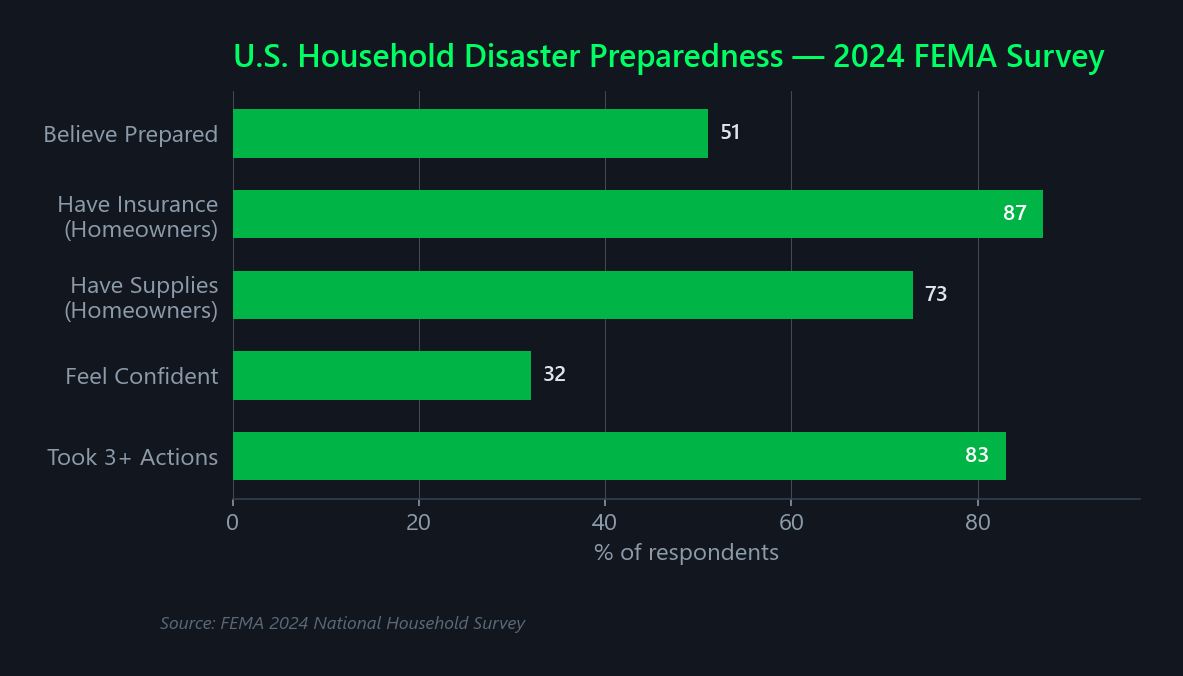
The preparedness gap between homeowners and renters is one of the most consistent findings across federal disaster readiness surveys. Housing tenure correlates with insurance access, emergency supply stockpiling, evacuation funding, and disaster planning - creating a compounding vulnerability for the 44 million U.S. renter households and an estimated 120 million renters in Europe and Asia-Pacific combined.

Confidence Gap
83% took preparedness actions, but only 32% feel confident those actions would help. 51% believe they are prepared - a number that has risen from 42% in 2017. The gap between action and confidence suggests many households have partial kits or incomplete plans. A complete basic kit and 30-day emergency fund together cost $1,500 to $3,000, roughly equivalent to one month of average household expenses.
Homeowners vs. Renters
73% of homeowners had emergency supplies compared to 60% of renters. 87% of homeowners had insurance compared to 43% of renters. Only 35% of lower-income individuals had money saved for emergencies. The preparedness gap tracks closely with income and housing status.
Market Growth
The global emergency kit market reached $21.5 billion in 2023, projected to hit $41.8 billion by 2032 (CAGR 8.2%). Online retail accounts for 60% of sales. Multi-functional kit demand is projected to rise 15% in 2025-2026. North America holds 35% of the global market share. The preparedness industry has attracted increasing institutional investment, with venture capital funding for emergency technology and supply companies exceeding $800 million in 2025.
Preparedness Supplies
Emergency supplies matched to current threat conditions.
Essential Preparedness Supplies
Start your emergency preparedness journey