North Korea Fires Two East-Coast Ballistic Missiles Into the Sea of Japan
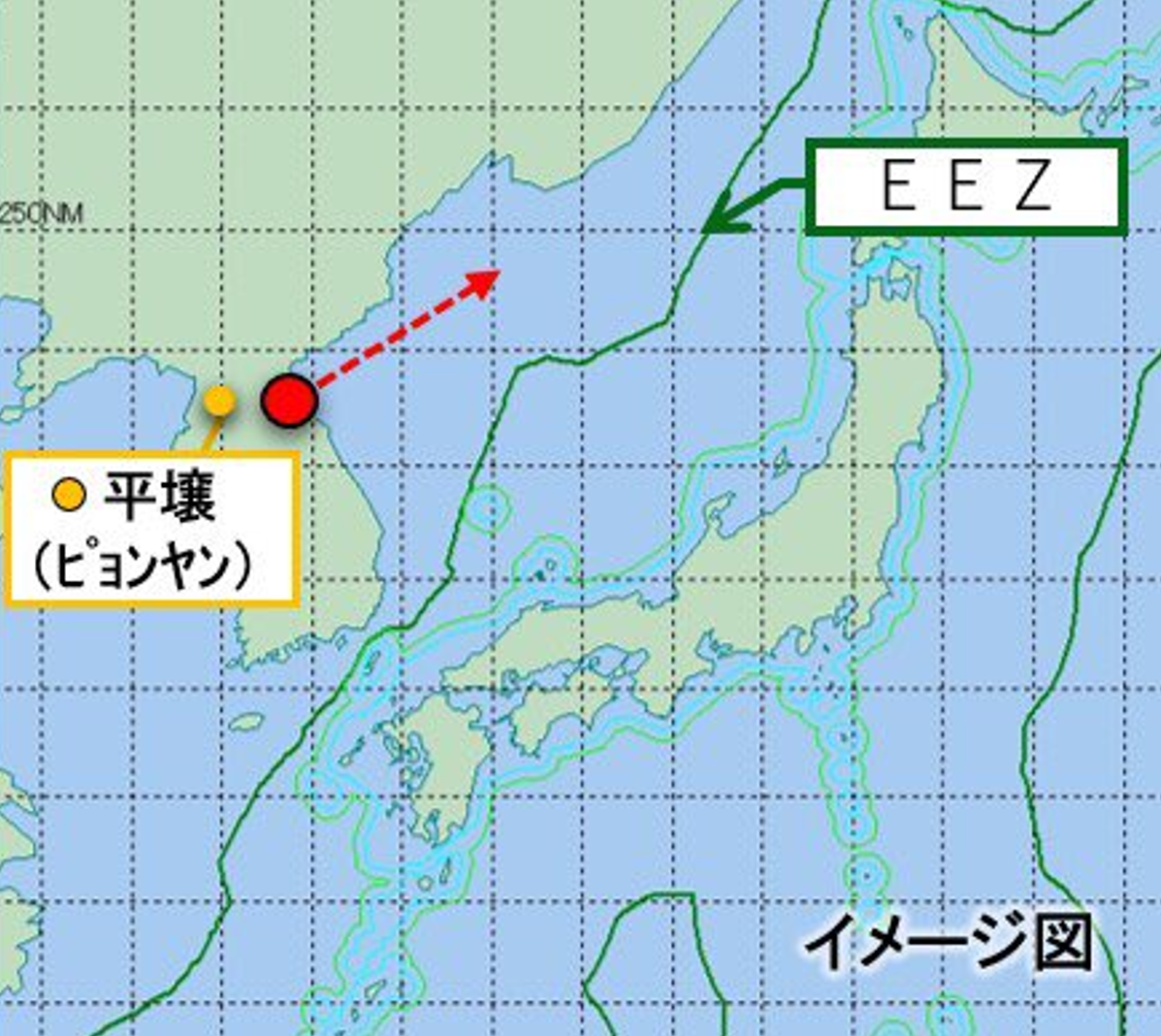
KOREAN PENINSULA — On September 20 at about 8:54 AM UTC (5:54 PM Japan time), North Korea launched at least one ballistic missile from the vicinity of its east coast toward the northeast, the Japanese Defense Ministry and Cabinet Secretariat said.
The ministry estimated that missile reached a peak altitude of about 43 miles (70 km), flew about 367 miles (590 km), and fell in the Sea of Japan outside Japan’s exclusive economic zone, the maritime belt extending up to 200 nautical miles from the coast in which a coastal state holds resource rights. Government notices to nearby aircraft and ships had produced no damage reports at the time of the release.
In a separate launch the same afternoon, at about 6:00 AM UTC (3:00 PM Japan time), North Korea fired at least one ballistic missile from near its east coast toward the northeast, the Japanese Defense Ministry said.
That earlier missile reached about 37 miles (60 km), flew about 273 miles (440 km), and was also estimated to have fallen in the Sea of Japan outside Japan’s exclusive economic zone.
South Korea’s Joint Chiefs of Staff identified the first firing as a short-range ballistic missile from the Wonsan area that flew about 280 miles (450 km) toward the East Sea, the name Seoul uses for the same body of water.
Japanese Prime Minister Sanae Takaichi issued the same three instructions after each launch: gather and analyze information and brief the public, confirm the safety of aircraft and ships, and hold a full readiness posture.
Japan Protests Missile Launches As Violations Of UN Security Council Resolutions
Tokyo stood up its Cabinet crisis cell on North Korea and said it was coordinating analysis with the United States and South Korea.
Japan protested the firings as violations of United Nations Security Council resolutions. Japanese Defense Minister Shinjiro Koizumi, speaking to reporters at the Defense Ministry after the second shot, said the protest had gone through diplomatic channels.
South Korea’s presidential office convened an emergency National Security Council meeting and called on Pyongyang to stop ballistic missile launches.
No official public statement on the September 20 firings has been issued by the U.S. Department of War, U.S. Indo-Pacific Command, or the U.S. State Department, and North Korea’s state media has issued none.
What Happened
-
The later shot, at about 8:54 AM UTC, is the one Japan timed at 5:54 PM local and placed outside the exclusive economic zone on a northeast track from the east coast.
-
The earlier shot, at about 6:00 AM UTC, is the one South Korea’s Joint Chiefs of Staff timed from the Wonsan area and labeled a short-range ballistic missile; Japan published a separate east-coast notice for the same hour.
-
Japanese Prime Minister Sanae Takaichi issued information, safety, and readiness instructions at 6:06 AM UTC after the first shot and again at 9:01 AM UTC after the second, and the Cabinet crisis cell on North Korea convened an emergency team after each event.
-
Japanese Defense Minister Shinjiro Koizumi told reporters at the Defense Ministry after the second firing that Tokyo had lodged a stern protest through diplomatic channels and condemned the shots as resolution violations.
-
Japan said notices to nearby aircraft and ships had produced no damage reports after either firing, and the Japan Coast Guard later said no vessel damage had been confirmed as of 9:30 AM UTC.
-
South Korea’s Joint Chiefs of Staff described the later object as an unidentified projectile toward the East Sea and published no range or altitude for it, while stating that South Korean and U.S. intelligence services had tracked the first launch from its initial stage and had shared that information with Japan.
Japan: Both Launches Outside Exclusive Economic Zone (EEZ)
The Japanese Defense Ministry published a seven-point notice on the 6:00 AM UTC firing that set the first missile’s peak at about 37 miles (60 km) and its ground range at about 273 miles (440 km), then a matching notice on the 8:54 AM UTC firing that raised those figures to about 43 miles (70 km) and about 367 miles (590 km).
Both notices said Japan, the United States, and South Korea were still analyzing details. A ministry follow-up on the later shot stated that entry into Japan’s exclusive economic zone had not been confirmed at that time.
The two Japanese range figures differ from South Korea’s Joint Chiefs of Staff figure of about 280 miles (450 km) on the first missile. The gap is 7 miles (10 km) and sits inside ordinary rounding across two tracking networks rather than a dispute over whether a launch occurred.
Japan’s notices stated that information had been passed to aircraft and ships in the area and that no damage reports had been confirmed. The Japan Coast Guard, citing Defense Ministry information, told mariners not to approach any fallen objects and to report them.
Japanese Defense Minister Shinjiro Koizumi holds the defense portfolio that issued those notices. The ministry’s dated notices remain the source for the altitude, range, and exclusive-economic-zone estimates.
Official Statements
-
Japanese Defense Ministry and Cabinet Secretariat, September 20, 8:54 AM UTC launch notice: “North Korea launched at least one ballistic missile from the vicinity of its east coast toward the northeast at around 5:54 p.m. today. Details are now being analyzed in close coordination among Japan, the United States, and South Korea, but the launched ballistic missile reached a maximum altitude of about 70 km, flew about 590 km, and is estimated to have fallen outside our country’s exclusive economic zone (EEZ) in the Sea of Japan.”
-
Japanese Prime Minister Sanae Takaichi, instructions at 6:01 p.m. Japan time, September 20: “1. Dedicate maximum effort to gather and analyze information, and provide the public with information in a timely and appropriate manner. 2. Ensure the safety of aircraft, vessels, and other assets. 3. Take all possible measures for precaution, including readiness for contingencies.”
-
Japan Ministry of Defense English account, September 20, second launch: “An object that may be a ballistic missile has been launched from North Korea. JMOD/JSDF will provide updates as soon as further information becomes available.”
-
Japanese Defense Ministry and Cabinet Secretariat, September 20, 3:00 p.m. Japan time launch notice: “North Korea launched at least one ballistic missile from the vicinity of its east coast toward the northeast at around 3:00 p.m. today. Details are now being analyzed in close coordination among Japan, the United States, and South Korea, but the launched ballistic missile reached a maximum altitude of about 60 km, flew about 440 km, and is estimated to have fallen outside our country’s exclusive economic zone (EEZ) in the Sea of Japan.”
-
Japanese Prime Minister Sanae Takaichi, instructions at 3:06 p.m. Japan time, September 20: “1. Dedicate maximum effort to gather and analyze information, and provide the public with information in a timely and appropriate manner. 2. Ensure the safety of aircraft, vessels, and other assets. 3. Take all possible measures for precaution, including readiness for contingencies.”
-
Japan Ministry of Defense English account, September 20, first launch: “An object that may be a ballistic missile has been launched from North Korea. JMOD/JSDF will provide updates as soon as further information becomes available.”
-
South Korea’s Joint Chiefs of Staff, September 20, first-launch statement: “Our military detected a ballistic missile launched from the Wonsan area of North Korea towards the East Sea at around 3:00 pm (0600 GMT).”
-
South Korea’s Joint Chiefs of Staff, September 20, on tracking and posture: “We are closely monitoring North Korea’s various activities and maintain the capability and readiness to overwhelmingly respond to any provocations, under the staunch South Korea-U.S. combined defense posture.”
Full Report & Analysis
The full report includes expert analysis and risk assessment.
Full Report & Analysis →