Iranian Fire Damages U.S. F-35 as Energy War Spreads Across Persian Gulf
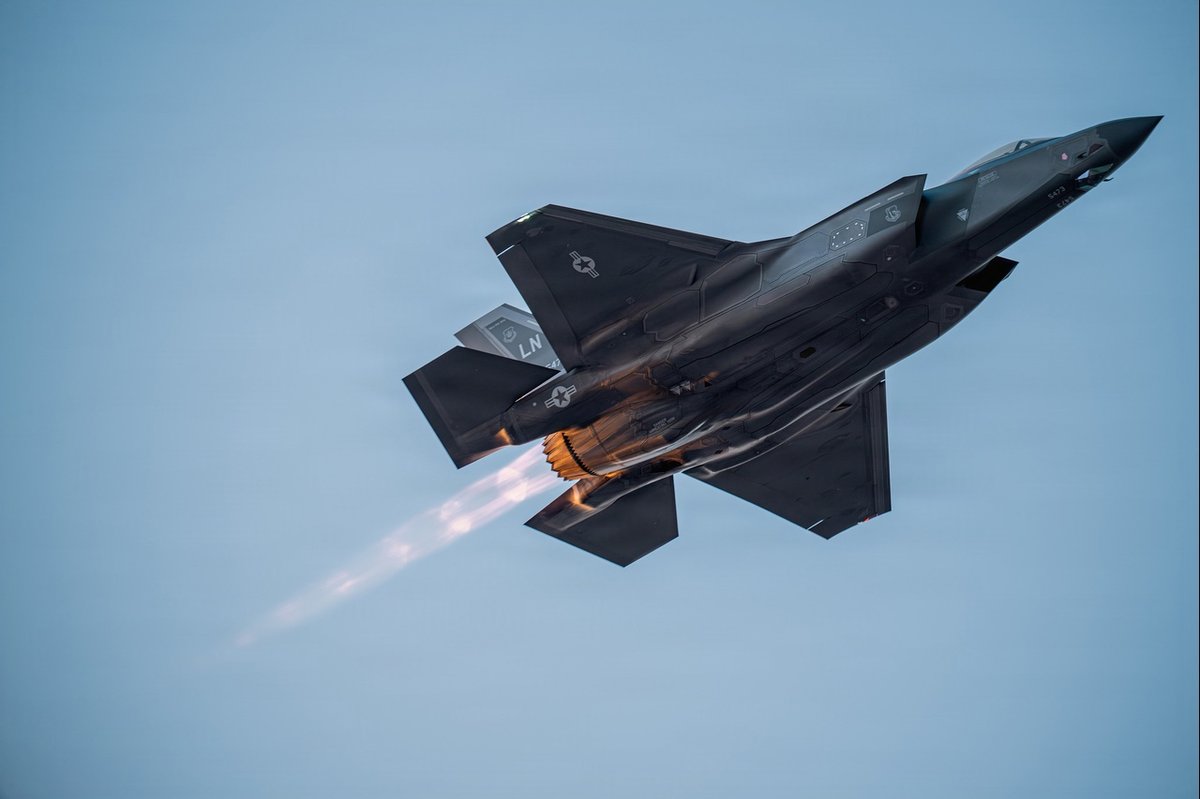
A U.S. Air Force F-35A Lightning II assigned to the 388th Fighter Wing during a combat sortie over the Middle East. Credit: U.S. Air Force
MIDDLE EAST — Iranian air defenses struck a U.S. F-35A Lightning II stealth fighter during a combat mission over Iran on March 19, forcing the aircraft to make an emergency landing at a U.S. air base in the region.
The incident marks the first confirmed damage to a fifth-generation stealth aircraft by Iranian fire since Operation Epic Fury began on February 28. Separately, the Israeli Air Force struck Iranian naval infrastructure in the Caspian Sea, opening a new geographic front in the conflict, while Iran retaliated against Qatar's Ras Laffan liquefied natural gas (LNG) complex after Israeli jets hit Iran's South Pars gas field.
Situation at a Glance
- F-35 damaged: First confirmed hit on a U.S. stealth fighter by Iranian fire; pilot safe, aircraft landed at an undisclosed base
- U.S. Central Command (CENTCOM) totals: More than 7,800 Iranian targets struck, 120+ naval vessels destroyed including all 11 Iranian submarines since February 28; all ballistic missile and drone attacks down 90% from Day 1
- Caspian Sea strikes: Israeli Air Force struck Bandar Anzali, destroying corvettes, missile boats, and the northern fleet command center
- South Pars attacked: Israeli aircraft struck treatment and processing facilities at Asaluyeh, the hub of the world's largest gas field
- Qatar retaliation: Iranian ballistic missiles hit Ras Laffan Industrial City, taking 17% of Qatar's LNG export capacity offline with 3-5 year repair estimates
- Trump warning: President Trump threatened to destroy the "entirety of the South Pars Gas Field" if Iran strikes Qatar's energy infrastructure again
- Six-nation statement: UK, France, Germany, Italy, the Netherlands, and Japan condemned Iran's Hormuz closure and announced joint planning for safe passage
- Oil prices: Brent crude briefly touched $119/barrel before settling near $114; analysts citing potential for $200/barrel
Three-Axis Expansion in 48 Hours
CRITICAL — The conflict expanded on three axes in 48 hours: geographically (Caspian Sea strikes opened a new theater), technologically (first damage to a U.S. stealth aircraft), and economically (direct strikes on Gulf energy infrastructure by both sides).
The Trump administration's explicit threat to destroy South Pars entirely represents the most consequential escalation warning since the operation began, directly linking any further Iranian strikes on Qatar to a response that would eliminate the gas field underpinning Iran's domestic energy supply.
F-35 Battle Damage Over Iran
The IRGC released video on March 19 claiming to show a surface-to-air missile striking the F-35 during its combat sortie. CENTCOM spokesman Capt. Tim Hawkins acknowledged the aircraft sustained damage and landed safely, with the incident under investigation. Iran's Islamic Republic News Agency published the targeting footage, which showed a tracking system acquiring the jet before impact.
The damage to a fifth-generation stealth aircraft carries operational significance beyond a single airframe. Iranian ballistic missile launches have dropped 86% and drone launches 73% from the opening days of the operation, according to Adm. Brad Cooper's March 19 update.
CENTCOM has confirmed the aircraft was damaged but has not identified what struck it, characterizing the cause as "suspected" Iranian fire. If the strike came from a surface-to-air missile, it would indicate Iran retains pockets of integrated air defense capability despite three weeks of sustained suppression operations.
IAF Strikes on Bandar Anzali, Caspian Sea
The Israeli Air Force struck Bandar Anzali, the primary base of the Iranian Navy's northern fleet on the Caspian Sea. Targets included corvettes, missile boats, auxiliary and guard vessels, a port command center controlling northern fleet operations, and shipyard infrastructure for vessel repair and maintenance. The strike represents the first Israeli operation against Iranian assets in the Caspian since the war began.
Bandar Anzali is a key node in the Iran-Russia maritime supply corridor. Vessels have routinely disabled Automatic Identification System (AIS) transponders to transfer cargo between Anzali and Amirabad since Russia's full-scale invasion of Ukraine. Striking this hub disrupts not only Iran's northern naval capability but a logistics route that both Moscow and Tehran have relied on for sanctions evasion.
South Pars and Ras Laffan Energy Infrastructure Strikes
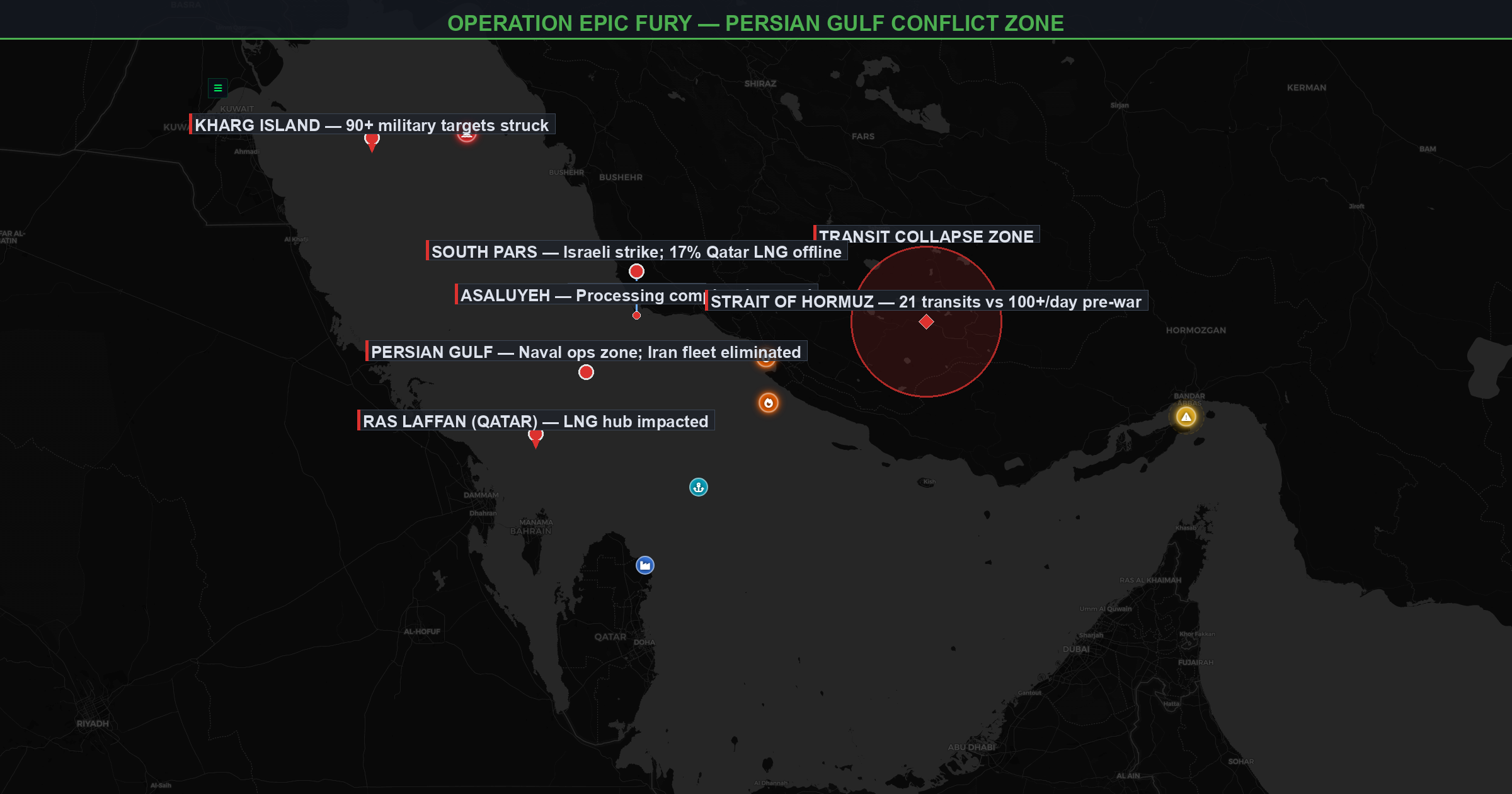
Israeli aircraft struck treatment and processing facilities at Asaluyeh on March 18, the onshore hub for Iran's South Pars gas field. The Iranian side of South Pars produces approximately 57 million cubic meters of gas per day (2 billion cubic feet), a significant share of national output used for power generation and petrochemical production.
A U.S. defense official stated the strike was coordinated with the White House, though President Trump publicly denied any prior knowledge.
Iran responded within hours by firing ballistic missiles at Ras Laffan Industrial City in Qatar, the world's largest LNG export facility. Four missiles were intercepted; one struck the complex directly, igniting three fires.
QatarEnergy CEO Saad al-Kaabi stated 17% of the country's LNG export capacity was taken offline, with repairs estimated at three to five years. Qatar subsequently expelled Iranian diplomatic staff. No casualties were reported at Ras Laffan.
Trump posted on Truth Social that the United States "will massively blow up the entirety of the South Pars Gas Field at an amount of strength and power that Iran has never seen or witnessed before" if Qatar's LNG facilities are struck again.
He simultaneously claimed Israel "will no longer" target South Pars, while stating he did not want to authorize that level of destruction "because of the long-term implications that it will have on the future of Iran."
Coalition Response and Oil Markets
The UK, France, Germany, Italy, the Netherlands, and Japan issued a joint statement on March 19 condemning Iranian attacks on commercial shipping, civilian energy infrastructure, and the de facto closure of the Strait of Hormuz.
The six nations called on Iran to cease "threats, laying of mines, drone and missile attacks and other attempts to block the Strait to commercial shipping." The statement announced the beginning of joint planning to ensure safe passage and welcomed the International Energy Agency's coordinated release of strategic petroleum reserves.
Brent crude briefly reached $119/barrel on March 19 following reported damage at Ras Laffan before settling near $114. European natural gas benchmarks jumped 6%. Only 21 tankers have transited the Strait of Hormuz since February 28, compared to more than 100 daily before the conflict.
The UK Ministry of Defense reported that British counter-drone units destroyed more than 10 drones in a high-threat area overnight. Royal Air Force (RAF) Typhoon and F-35 aircraft continued defensive patrols over the Eastern Mediterranean supported by Voyager tankers and Merlin and Wildcat helicopters.
Official Statements
- CENTCOM, Adm. Brad Cooper, March 19: "U.S. forces continue delivering devastating combat power against the Iranian regime." Cooper reported 7,800+ targets struck and 120+ vessels destroyed.
- President Trump, Truth Social, March 19: "The United States of America, with or without the help or consent of Israel, will massively blow up the entirety of the South Pars Gas Field" if Qatar is attacked again.
- Six-nation joint statement, March 19: "We condemn in the strongest terms recent attacks by Iran on unarmed commercial vessels in the Gulf, attacks on civilian infrastructure including oil and gas installations, and the de facto closure of the Strait of Hormuz."
- Secretary of War Pete Hegseth, Pentagon briefing, March 19: "This is not those wars," Hegseth said, distinguishing Epic Fury from Iraq and Afghanistan. He stated all Iranian ballistic missile and drone attacks are down 90% since operations began, and all 11 Iranian submarines have been sunk.
- UK Ministry of Defense, March 19: British ground-based counter-drone units "took out more than 10 drones that were threatening lives on the ground" while RAF aircraft continued Eastern Mediterranean patrols.
The convergence of a stealth aircraft hit, energy infrastructure strikes by both sides, and an explicit presidential threat to destroy Iran's largest gas field marks the most dangerous 48-hour period since Operation Epic Fury began. The six-nation Hormuz statement signals a potential shift from bilateral U.S.-Iran confrontation toward a broader coalition response, though none of the signatory nations have yet committed naval forces to escort operations. The fundamental dynamic remains unchanged: the Strait of Hormuz stays effectively closed, global energy supply chains are under direct military pressure, and the escalation ceiling continues to rise.