IDF Says It Struck Nuclear Weapons Compound; IAEA Confirms No Radiological Release as Hormuz Closure Holds
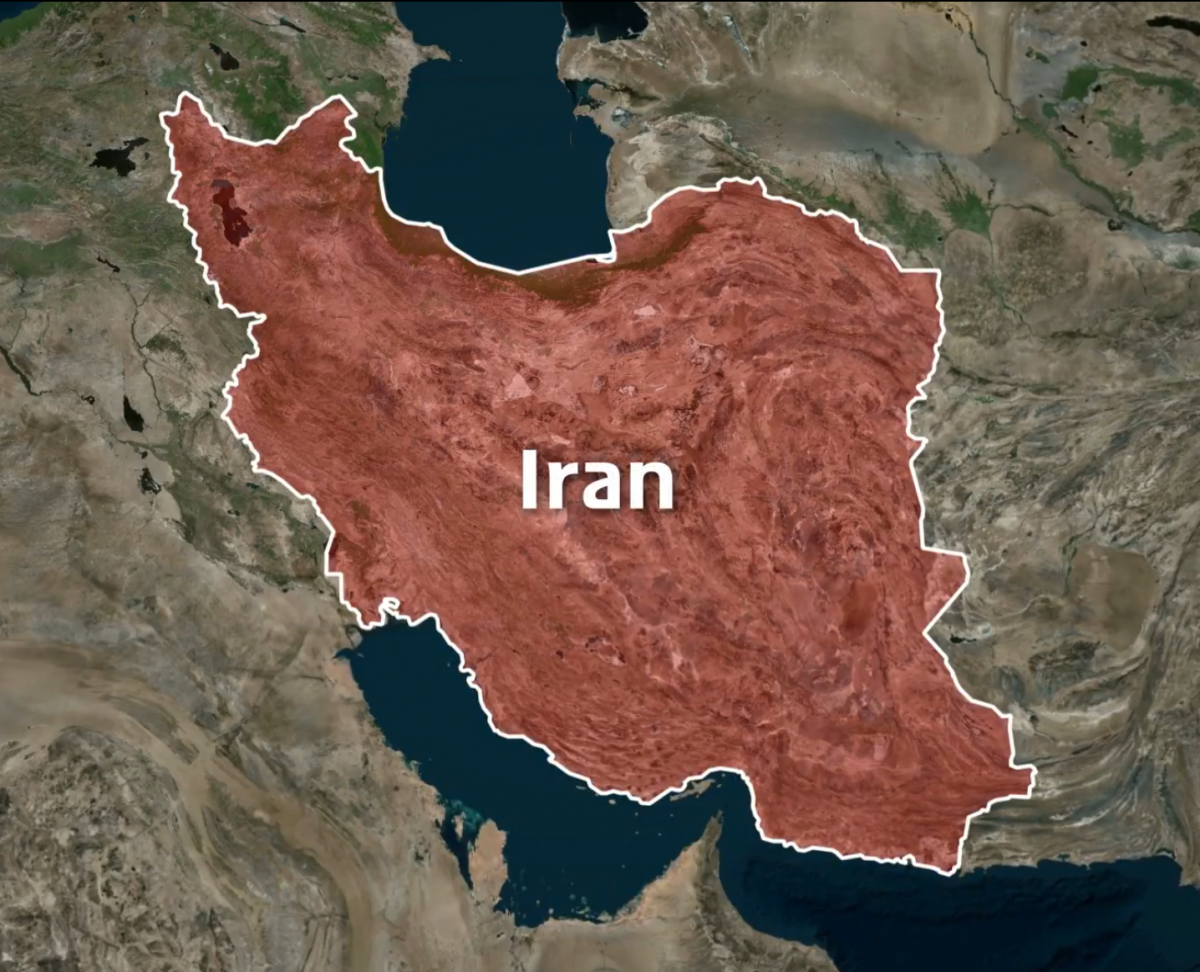
MIDDLE EAST - The IAEA released updated satellite imagery on March 4 confirming no damage to facilities containing nuclear material in Iran and no radiological release risk. The Israel Defense Forces (IDF) struck what they say was a covert Minzadehei nuclear weapons development compound, claiming to have removed a key component of Iran's nuclear capability.
Near the Isfahan nuclear site, the IAEA identified damage at two buildings. No additional impact occurred at Natanz beyond previously reported entrance damage, and no impact at other nuclear sites including the Bushehr Nuclear Power Plant.
No radiation elevation has been detected regionally; nuclear facilities in the UAE, Jordan, and Syria continue to operate normally. IAEA Director General Rafael Mariano Grossi called for maximum restraint.
Israel struck the Assembly of Experts building in Qom on March 3 during what Israeli defense sources described as a vote on Supreme Leader Ayatollah Ali Khamenei's successor. Reports indicate the UAE is considering strikes on Iranian missile sites, though no official confirmation has been issued.
Iran ordered the Strait of Hormuz closed and attacked tankers, according to Iranian officials. Automatic Identification System (AIS) data shows transits down approximately 80%.
U.S. Central Command (CENTCOM) reported approximately 2,000 targets struck as of March 4, up from 1,700+ in the first 72 hours. Iranian Red Crescent reported at least 787 killed and 700+ injured nationwide.
Three senior Iranian officials have been killed: security adviser Ali Shamkhani, Islamic Revolutionary Guard Corps (IRGC) Commander-in-Chief Mohammad Pakpour, and Defense Minister Aziz Nasirzadeh. Ahmad Vahidi was appointed new IRGC chief. An interim leadership council was formed consisting of President Pezeshkian, Chief Justice Mohseni-Eje'i, and Guardian Council member Alireza Arafi.
CENTCOM confirmed all 11 Iranian warships in the Gulf of Oman destroyed. Houthi officials expressed solidarity but no attacks have been launched. The United Nations Security Council (UNSC) held a session with no resolution passed; Russia and China blocked the U.S. program of work.
Gulf states and the European Three/E3 (UK, France, Germany) issued joint statements condemning Iran's attacks.
The IDF's Minzadehei strike targets the human and technical infrastructure of Iran's nuclear program while IAEA monitoring confirms the enrichment facilities remain largely intact. No weapons of mass destruction (WMD) indicators have emerged despite the scale of operations.
Iran's Hormuz closure and tanker attacks mark a direct threat to global energy supply, while the Qom strike's disruption of succession introduces uncertainty into Iran's decision-making.
Operational Snapshot
U.S./Coalition Strikes: Approximately 2,000 targets hit, up from 1,700+ in first 72 hours with B-2 bombers and GBU-57 Massive Ordnance Penetrators; IDF neutralized approximately 300 Iranian missile launchers; IDF struck covert Minzadehei nuclear weapons development compound.
Iranian Losses: Supreme Leader Khamenei killed; hundreds of missile launchers destroyed; all 11 warships in Gulf of Oman destroyed (CENTCOM); at least 787 killed, 700+ injured nationwide (Red Crescent).
U.S. Casualties: 6 killed in action at Shuaiba port, Kuwait; 3 F-15E jets lost to Kuwaiti air defenses with 6 crew recovered stable.
Retaliation: Over 100 ballistic missiles at Al Asad base (CENTCOM); drone strikes on U.S. Embassy Riyadh and Consulate Dubai; Hormuz closure with tanker attacks.
Gulf Intercepts: UAE neutralized 186 missiles and 812 drones total; Kuwait engaged similar waves.
Coalition: UK deployed HMS Dragon destroyer and Wildcat helicopters; France proposed maritime security coalition.
Nuclear/WMD: IDF struck Minzadehei nuclear weapons development compound; IAEA (March 4): no damage to nuclear material, no radiation elevation, Bushehr and regional sites normal; Natanz entrance damage only; CTBTO seismic event assessed natural; 460 kg near-weapons-grade uranium (Rubio); Grossi warns radiological release risk if attacks continue.
Evacuations: Approximately 9,000 Americans evacuated from 6 countries; 1,600 requesting assistance.
Force Protection: Force Protection Condition (FPCON) Bravo+ at Camp Pendleton; shelter-in-place at multiple embassies.
U.S.-Israeli Coordinated Strikes on Iranian Nuclear Facilities
U.S. and Israeli forces executed strikes starting February 28 using Tomahawk missiles and GBU-57 Massive Ordnance Penetrators.
CENTCOM stated over 1,700 targets were hit in the first 72 hours, including command centers and missile sites. The IDF reported hundreds of fighter jets striking hundreds of targets in Iran and Lebanon, neutralizing approximately 300 Iranian missile launchers.
Secretary of Defense Pete Hegseth stated "Strikes targeted Natanz; severe damage confirmed." Israeli Prime Minister Benjamin Netanyahu declared "Israel and the United States launched an operation to remove the existential threat posed by the terrorist regime in Iran."
Secretary of State Marco Rubio described the operation as the two most powerful air forces working together. The stated objectives include elimination of Iran's short-range ballistic missile threat and its navy. Rubio stated Iran produces over 100 missiles a month versus 6-7 U.S. interceptors, plus thousands of one-way attack drones.
According to Rubio, Iran is 1-1.5 years from a "line of immunity" where conventional weapons would shield the nuclear program. Rubio stated "The next phase will be even more punishing on Iran." No ground deployment is planned, according to Department of Defense officials; the focus remains on air and naval strikes.
On the question of governmental change, Rubio stated he "would not be heartbroken if the Iranian people could overthrow this government."
The IDF struck the covert Minzadehei nuclear weapons development compound, stating it was used by a group of nuclear scientists developing a key component for nuclear weapons. The IDF said it tracked activities at the location using intelligence. Independent verification of the compound's nuclear weapons role has not been provided.
Assessment: Strikes mark the first direct U.S. action on Iranian nuclear sites since June 2025. IAEA imagery confirms entrance building damage only at Natanz, with underground enrichment halls intact. The IDF's Minzadehei strike represents a different approach: targeting weapons development personnel and technical capabilities rather than hardened enrichment infrastructure. If the IDF's characterization of the compound is accurate, this combines with the penetrator strikes to degrade both facilities and the expertise needed for a weapons program. (Moderate confidence: IAEA reports, IDF statement.)
IAEA Verification of Nuclear Site Damage
The IAEA released an updated satellite imagery assessment on March 4 confirming no damage to facilities containing nuclear material in Iran and no radiological release risk. Near the Isfahan nuclear site, damage was visible at two buildings.
No additional impact was detected at Natanz beyond previously reported entrance damage to the Fuel Enrichment Plant. No impact occurred at other nuclear sites, including the Bushehr Nuclear Power Plant.
No radiation elevation has been detected anywhere in the region. The nuclear power plant in the UAE and research reactors in Jordan and Syria continue to operate normally. Grossi called for maximum restraint to avoid any danger of a radiological incident and stressed the importance of maintaining regional nuclear safety during the military conflict.
In the March 3 assessment, Grossi stated "Based on the latest available satellite imagery, IAEA can now confirm some recent damage to entrance buildings of Iran's underground Natanz Fuel Enrichment Plant (FEP). No radiological consequence expected and no additional impact detected at FEP itself, which was severely damaged in the June conflict."
Seizmic Event Recorded South Of Bid Shahr. CTBTO Assesses Natural Earthquake, Rules Out Nuclear Detonation
The CTBTO recorded a seismic event south of Bid Shahr, assessed as a natural earthquake and has ruled out nuclear detonation:
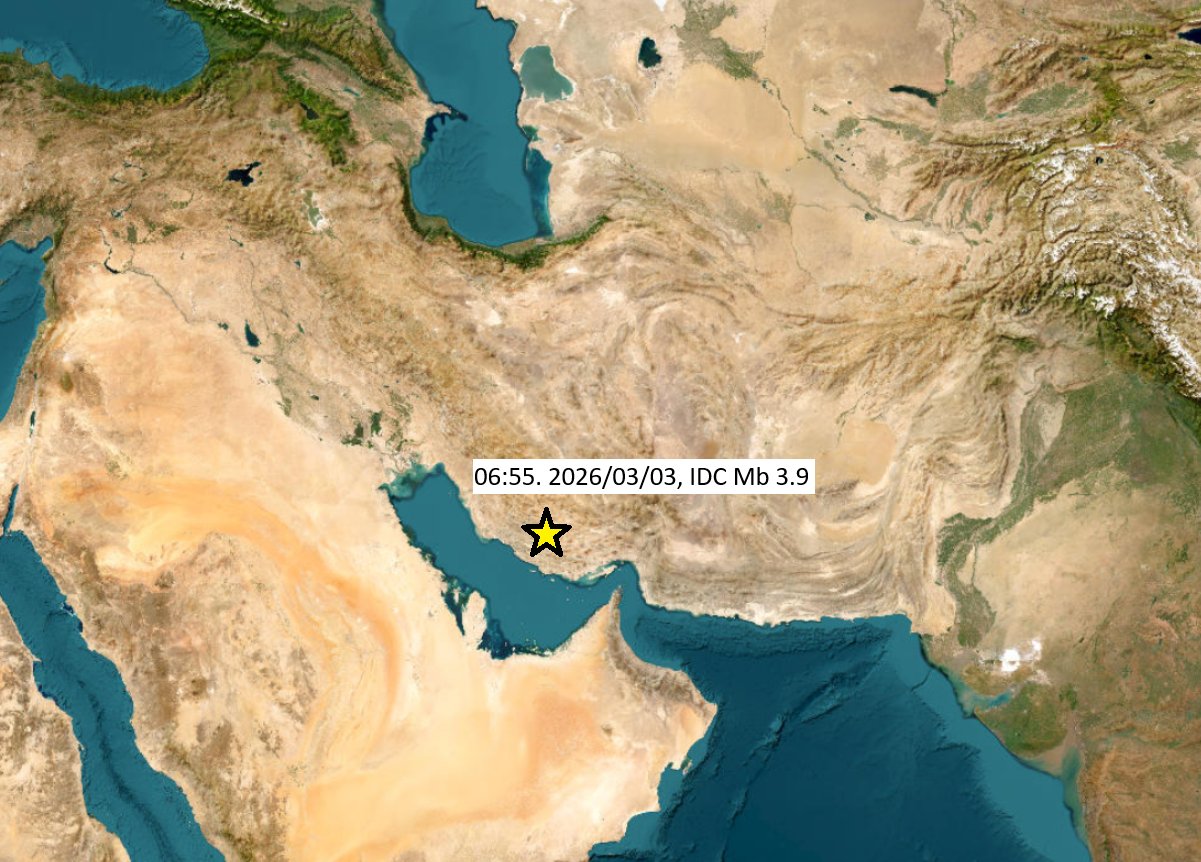
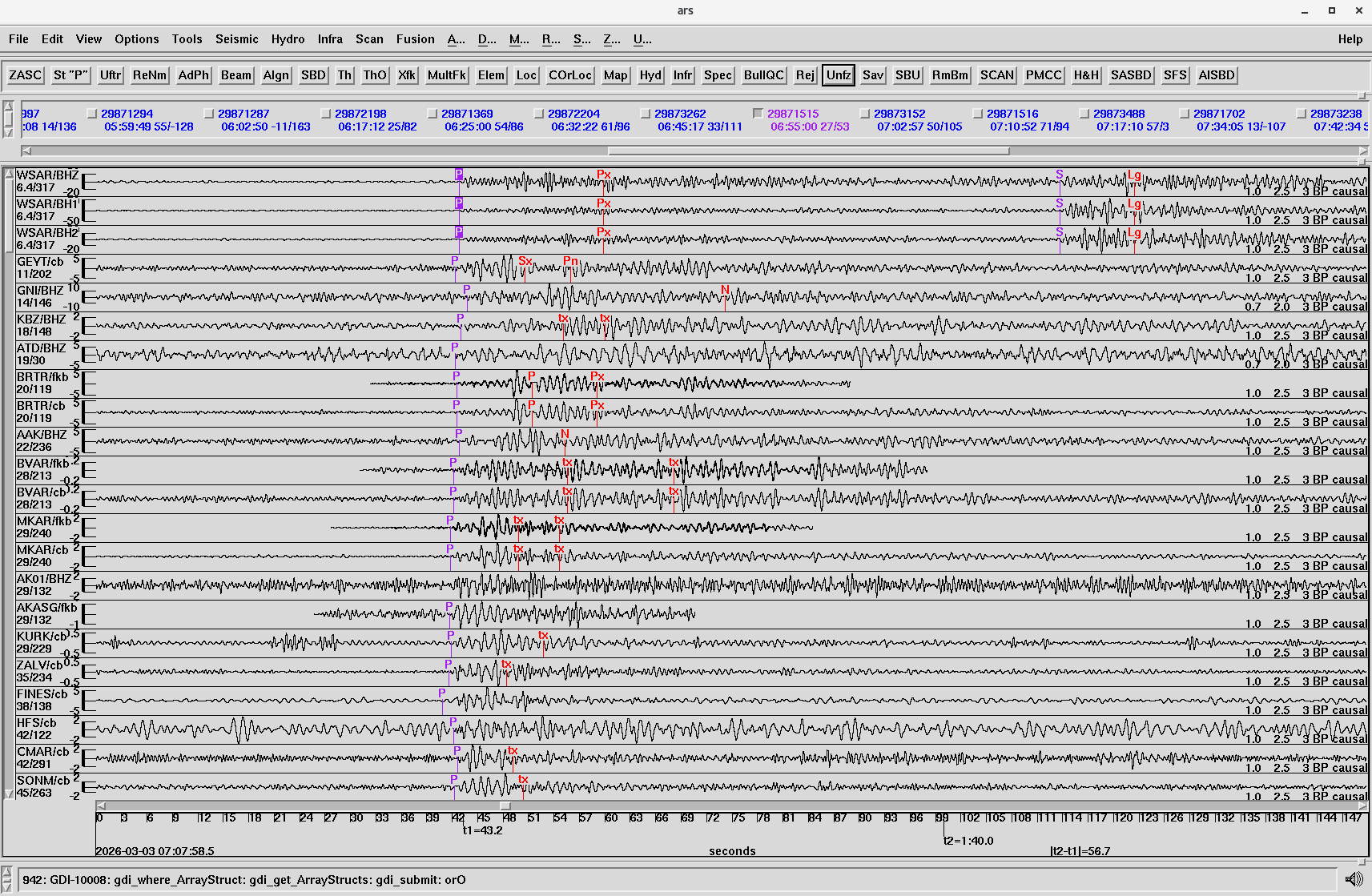
Assessment: The CTBTO seismic network distinguished the Bid Shahr event from a nuclear test within hours, confirming no underground detonation accompanied the strikes. This rapid verification prevented a WMD escalation spiral. Continued CTBTO monitoring provides the fastest independent check on whether Iran attempts clandestine testing during the post-strike chaos. (High confidence: CTBTO seismic data.)
Rubio stated Iran holds 460 kg of 60% enriched uranium, enough for approximately 11 nuclear weapons, and that Tehran has rejected all discussion of enrichment limitations.
The IAEA and U.S. damage assessments diverge: IAEA reports no damage to nuclear material and entrance-only impact at Natanz, while Hegseth stated "severe damage confirmed." This gap affects understanding of actual mission effectiveness. Underground halls intact means Iran's enrichment infrastructure survived.
The IAEA previously assessed damage at Isfahan including tunnel entrances, the Uranium Conversion Facility, and the Fuel Plate Fabrication Plant, with Fordow directly impacted. The March 4 imagery update narrows the Isfahan damage to two buildings near the nuclear site with no damage to nuclear material. Grossi warned "A radiological release cannot be excluded if attacks on nuclear sites continue."
Iran's 460 kg enriched uranium stockpile remains. The IAEA reports no enrichment resumption post-strikes, and despite Iran's SNSC condemning the strikes and ordering retaliatory measures, no WMD indicators have emerged.
Assessment: The IAEA's March 4 comprehensive regional assessment strengthens the pattern from June 2025: surface damage only, nuclear material intact, no radiation across Iran, the UAE, Jordan, and Syria. This provides the most complete radiological picture since operations began. The gap between IAEA's "no damage to nuclear material" and Hegseth's "severe damage confirmed" remains unresolved. CTBTO seismic data rules out nuclear detonation. Grossi's warning about continued strikes coexists with his confirmation that no release has occurred; the risk is prospective, not current. (High confidence: IAEA monitoring, CTBTO data.)
IAEA Reports No Enrichment Resumption
Iran convened Supreme National Security Council (SNSC) emergency sessions condemning attacks on safeguarded sites. The IAEA shows no radiological release and no enrichment resumption. No cyber component accompanied the kinetic strikes; Iran's response has been conventional only.
The pace has accelerated from weekly exchanges to daily intercepts since operations began. CTBTO seismic monitoring rules out underground nuclear detonation.
Iranian Retaliatory Missile and Drone Attacks on U.S. Bases
Iran fired over 100 ballistic missiles at Al Asad Air Base in Iraq, causing structural damage, according to CENTCOM. UAE reported minor injuries to 68 nationals from debris during intercepts. Kuwait affirmed readiness with no casualties reported.
The U.S. Embassy in Riyadh was struck by two Iranian drones, causing minor damage to an empty building wing; shelter-in-place was ordered. The U.S. Consulate in Dubai was hit by a drone in the parking area, starting a fire; all personnel were reported safe.
Evacuations were ordered from Kuwait, Bahrain, Iraq, Qatar, Jordan, and the UAE. Approximately 9,000 Americans have been evacuated, with 1,600 still requesting assistance.
Iran's Supreme Leader's Office stated that the strikes were justified retaliation and that U.S. bases had been deliberately targeted.
CENTCOM Commander General Michael Erik Kurilla responded: "The Iranian regime is using mobile launchers to indiscriminately fire missiles in an attempt to inflict maximum harm across the region. U.S. forces are hunting these threats down and without apology or hesitation, we are taking them out."
Gulf Allies' Defensive Measures and Reported Impacts
UAE neutralized 186 missiles and 812 drones total since operations began, with three fatalities among Pakistani, Nepalese, and Bangladeshi nationals. Attacks have affected nationals from Egypt to Afghanistan.
UAE Ministry of Defence (MoD) stated "UAE air defence systems intercepted 11 ballistic missiles and 123 drones today... The Ministry strongly condemned the military targeting, describing it as blatant aggression and a grave violation of national sovereignty and international law." The UAE statement referred to Iranian attacks on sovereign territory.
Kuwaiti Army General Staff announced "The armed forces are currently dealing with a wave of missiles and drones… and are carrying out their missions to counter and deal with them."
A friendly fire incident downed three U.S. F-15E Strike Eagles in Kuwait by Kuwaiti air defenses, with six crew recovered stable. The dead and injured from Iranian attacks across the region span 15+ nationalities from Pakistan to Uganda.
Camp Pendleton elevated to FPCON Bravo+, suspending the Trusted Traveler Program, the first stateside force protection elevation since operations began.
Assessment: Gulf intercept rates remain high but sustained waves strain available missile and drone defense resources. The multinational casualty toll, spanning 15+ nationalities, creates diplomatic pressure beyond the primary belligerents. Camp Pendleton's FPCON Bravo+ is the first domestic force protection change tied to this operation. (Moderate confidence: Gulf MoD data.)
Trump Orders Hormuz Tanker Escorts as 20% of Global Petroleum at Risk; Iran Closes Strait
President Donald Trump ordered the U.S. International Development Finance Corporation (DFC) to provide political risk insurance for all maritime trade through the Gulf. The Strait of Hormuz handles 20% of global petroleum and liquefied natural gas. U.S. Navy escorts are expected to begin within days, according to Trump's directive.
Macron's proposed maritime security coalition would pool military resources to secure the shipping routes. Iran ordered the Strait of Hormuz closed and attacked tankers, according to Iranian officials; AIS data shows transits down approximately 80%.
Assessment: DFC insurance covering all Gulf maritime energy trade is an economic complement to kinetic operations. No major shipping premium spikes have been reported as of March 4, though the 80% transit drop based on AIS data suggests commercial shipping is self-diverting ahead of formal escorts. Red Sea shipping routes remain viable as alternatives. (Low confidence: AIS data and shipping reports.)
Market Reactions to Iran Conflict
South Korean Kospi index dropped 7.2% on March 3, its worst session since August 2024. Global funds offloaded over $3 billion in Korean equities on energy cost concerns. Japan's Nikkei 225 fell between 1.35% and 3.9% across trading sessions. European Stoxx 600 declined 1.61% to 1.7%, with FTSE 100 down 2.6%, DAX down 3.4%, and CAC down 2.9%.
U.S. markets showed mixed results: the S&P 500 closed between flat and down 0.94%, the Nasdaq ranged from up 0.37% to down 1%, and the Dow declined 0.2% to 1% across sessions. The wide ranges reflect volatile intraday swings as Hormuz developments broke during trading hours.
Brent crude surged between 5.85% and 10% to $79-83 per barrel; West Texas Intermediate (WTI) rose 6-8% to $72-73. Gold rose 1.05% to 2.1% to $5,297-5,420 per ounce, hitting a record $5,417 on March 3 before retreating to $5,120-5,170 on March 4.
Defense stocks advanced: Lockheed Martin up 3.3-4.6%, RTX up 3.6-4.7%, Northrop Grumman up 6%, L3Harris up 3.8%, Palantir up 5.8%.
Assessment: The Kospi's 7.2% plunge, the worst since August 2024, shows how directly Asian markets are exposed to Gulf energy disruptions. South Korea imports over 70% of its crude from the Middle East. Oil's surge to $79-83 adds inflation pressure globally, while gold's run to a record $5,417 confirms capital flight to safe havens. (Moderate confidence: exchange data.)
U.S. Travel and Security Advisories
The U.S. Department of State issued a security update for Americans in the Middle East on March 3.
Level 4 Do Not Travel: Iran, Iraq, Lebanon, Syria, Yemen.
Level 3 Reconsider Travel: Bahrain, Israel (West Bank Level 3, Gaza Level 4), Jordan, Kuwait, Qatar, United Arab Emirates.
Level 2 Exercise Increased Caution: Egypt, Oman, Saudi Arabia.
A separate "Depart Now" emergency directive was issued across 14+ countries, layered on top of formal advisory levels.
Assessment: The "Depart Now" directive covering 14+ countries is the broadest U.S. evacuation order since the 2023 Israel-Hamas evacuations. The layering of an emergency directive on top of existing travel levels is unusual and indicates the State Department views the threat to U.S. citizens as immediate rather than conditional. (High confidence: State Department update.)
U.S.-Israel Force Posture as Gulf Operations Expand
CENTCOM's force buildup includes 50,000+ troops, 200 fighters, two carriers, and B-52 bombers. CENTCOM confirmed all 11 Iranian warships in the Gulf of Oman destroyed, eliminating Iran's naval presence east of the Strait.
Iran's Hormuz closure deviates sharply from baseline transits, with tanker attacks accelerating the operational tempo. Iran's threats preceded and matched its closure enforcement.
Causal chain: U.S.-Israeli strikes (verified) led to Iranian retaliation on Gulf states (verified), prompting Gulf Cooperation Council (GCC) joint condemnation (verified) and potential UAE strikes on Iranian missile sites (assessed, low confidence). If the GCC joins offensive strikes, Houthi Red Sea attacks are likely to resume.
Assessment: The force buildup exceeds what a limited campaign requires; naval destruction removes Iran's maritime options east of Hormuz. CENTCOM's posture enables sustained operations well beyond the current five-day timeline. If the UAE joins offensive strikes, Houthi forces are likely to resume Red Sea disruption to demonstrate solidarity with Iran. (High confidence: CENTCOM statements.)
Nuclear Threat Note
The IAEA's March 4 satellite imagery assessment confirmed no damage to facilities containing nuclear material in Iran, no radiological release risk, and no radiation elevation anywhere in the region.
The Natanz Fuel Enrichment Plant remains unchanged from June 2025; current damage is limited to entrance buildings. Nuclear facilities in the UAE, Jordan, and Syria continue to operate normally. The Bushehr Nuclear Power Plant is unaffected.
The IDF says it struck a Minzadehei nuclear weapons development compound, claiming to have degraded weapons development capability; this targets the human infrastructure of the nuclear program rather than enrichment sites.
No nuclear-powered ballistic missile submarine surge has been detected. Grossi warned that radiological release cannot be excluded if attacks on nuclear sites continue, while the March 4 assessment confirms no such release has occurred.
Full Report & Analysis
The full report includes expert analysis and risk assessment.
Full Report & Analysis →