Middle East Escalation: Iranian Strikes Hit Gulf Civilians as U.S. Targets Naval Forces
MIDDLE EAST - Iran conducted missile and drone strikes on civilian locations across Gulf states on March 2, including airports in Dubai, Kuwait, and Erbil, along with hotels and residential areas, according to U.S. Central Command. The strikes resulted in at least 88 injuries - 58 in the UAE and more than 30 in Kuwait - and at least four killed, all foreign nationals, with additional injuries reported in Bahrain and Qatar. Bahrain confirmed a maritime facility near Mina Salman was attacked, with the fire contained.
A statement by U.S. President Donald Trump said that U.S. forces sank an Iranian Jamaran-class corvette in the Gulf of Oman and destroyed nine naval ships in total.
The FBI heightened domestic counter-terrorism alerts given potential retaliation risks. A U.K. Royal Air Force Typhoon intercepted an Iranian drone over Qatar, safeguarding airspace.
Civilian Sites Targeted in Gulf Strikes
Iranian attacks struck Dubai International Airport, Kuwait International Airport, Zayed International Airport in Abu Dhabi, and Erbil International Airport in Iraq. Hotels affected included Fairmont Palm and Burj Al Arab in Dubai, and Crowne Plaza in Bahrain. Ports in Dubai and residential zones in Beit Shemesh, Tel Aviv in Israel, Era Views Towers in Bahrain, and Qatar were also hit.
UAE air defenses intercepted 137 ballistic missiles and 209 drones, according to the UAE Ministry of Defence. Kuwait intercepted 97 ballistic missiles and 283 drones, according to Kuwaiti authorities.
These strikes contradicted Iran’s claim of focusing solely on military assets, which CENTCOM refuted as false. Casualties included at least 88 injured - 58 in the UAE and more than 30 in Kuwait - and four killed across the region, with additional injuries reported in Bahrain and Qatar.
Assessment: Attacks on airports and hotels disrupt travel and commerce, shifting impacts to civilian sectors. Residential targeting escalates humanitarian concerns, potentially isolating Iran diplomatically. Satellite imagery from commercial providers could verify damage and trajectories.
U.S. Naval Responses and Iranian Losses
U.S. forces targeted a Jamaran-class corvette at Chah Bahar pier, leading to its sinking. “The ship is currently sinking to the bottom of the Gulf of Oman at a Chah Bahar pier,” according to CENTCOM.
President Trump announced nine Iranian naval ships destroyed and their headquarters largely eliminated in separate strikes.
CENTCOM framed these actions as countering Iranian Islamic Revolutionary Guard Corps (IRGC) threats, noting over 1,000 American deaths attributed to them over 47 years. No U.S. losses reported in these engagements.
Assessment: Naval strikes diminish Iran’s sea capabilities, restricting Gulf patrols. Destroyed headquarters disrupts command, potentially delaying responses. AIS tracking from MarineTraffic would indicate remaining vessel movements.
Operation Epic Fury: U.S. Strike Campaign
Operation Epic Fury launched at 1:15 a.m. on February 28 at the President’s direction, targeting Iran’s security apparatus. Categories included command centers, IRGC joint headquarters, aerospace forces headquarters, air defense systems, ballistic missile sites, navy ships and submarines, anti-ship missile sites, and communication capabilities.
U.S. assets employed encompassed B-2 stealth bombers, F-22 and F-35 stealth fighters, F-18 and F-16 fighter jets, A-10 attack jets, THAAD and Patriot systems, MQ-9 Reapers, nuclear-powered carriers, guided-missile destroyers, EA-18G electronic attack aircraft, P-8 maritime patrol, RC-135 reconnaissance, M-142 HIMARS, C-17 and C-130 cargo, refueling tankers and ships, plus special capabilities.
Assessment: This multi-domain campaign degrades Iran’s integrated defenses, limiting response options across air, sea, and land. Asset diversity enables sustained operations, pressuring command structures. Monitoring DoD releases would reveal phase progressions.
Domestic U.S. Counter-terrorism Alert
FBI Director Kash Patel directed teams to high alert, activating Joint Terrorism Task Forces nationwide. “FBI personnel are fully engaged on the situation overseas,” Patel stated. Public reporting encouraged via hotline and website.
This follows three U.S. service member deaths and five seriously wounded from Iranian strikes on a U.S. Army base in Kuwait.
Assessment: Alerts address possible homeland repercussions from overseas actions. Enhanced monitoring strengthens prevention, though increased awareness may affect public sentiment. Tip line submissions in next hours would signal threat levels.
Allied Air Defense Engagements
A Royal Air Force Typhoon from Qatar joint squadron used an air-to-air missile to down an Iranian drone nearing Qatari territory. The intercept protected local airspace and U.K. interests. U.K. forces maintain patrols, contributing to regional security efforts.
Attacks on Bahrain Maritime Infrastructure
Bahrain’s interior ministry reported an Iranian strike on a facility near Mina Salman, with containment efforts succeeding. “Iranian aggression targets a maritime facility near Mina Salman. Civil Defence carries out procedures to control the fire,” the ministry stated. No casualties noted.
This incident adds to threats against Gulf energy and trade assets.
Assessment: Port strikes interrupt regional logistics, impacting oil exports. Swift containment mitigates short-term damage, but patterns could overburden response capacities. Port authority updates would track operational status.
Escalating Travel and Security Warnings
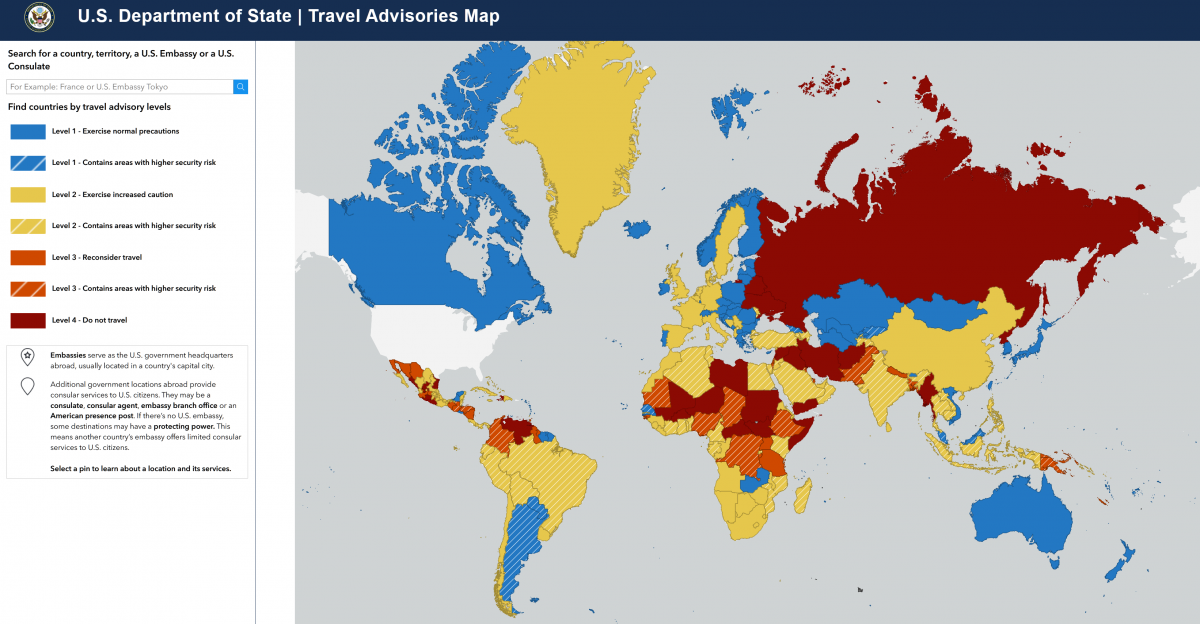
U.S. State Department urged global caution, with Level 4 advisories for Iran, Iraq, Syria; Level 3 for UAE, Qatar, Bahrain. U.K. FCDO: avoid all to Iran; non-essential to UAE, Qatar.
Canada: avoid all to Iran, UAE; reconsider Oman. Australia: do not travel to Iran, UAE; reconsider Saudi Arabia. Airspaces closed, disrupting more than 19,000 flights across the region.
Assessment: Warnings respond to missile risks, restricting movement. Disruptions affect economies, with rerouting increasing costs. Government portals offer timely guidance for affected travelers.
Strategic Assessment
Strikes on civilians and naval assets show intensified operations, with allies reinforcing defenses. Domestic measures indicate wider vigilance. Alternatively, contained damages might encourage talks if losses mount. Triggers include reduced strikes or diplomatic contacts. Gulf nations focus on protection, as warnings highlight uncertainties.
What to Watch
Civilian casualty updates in Gulf within 4 hours - hospital reports indicate scales.
Naval engagement reports from CENTCOM in 6 hours - losses reflect intensities.
FBI domestic alerts within 8 hours - incidents signal risks.
Allied interception announcements - frequencies via defense ministries.
Infrastructure recoveries in Bahrain - ministry statements track progress.
Airspace status changes - aviation authority notices.
Official Statements
U.S. Central Command, March 2, 2026: “During a UN Security Council meeting yesterday, the Iranian Ambassador to the U.N. stated their response has been directed solely and exclusively at the bases and assets of the United States. LIE. The Iranian Regime is actively targeting civilians and has attacked more than a dozen locations including: Dubai International Airport, Kuwait International Airport, Zayed International Airport, Abu Dhabi, Erbil International Airport, Iraq, Fairmont Palm Hotel, Dubai, Burj Al Arab Hotel, Dubai, Crowne Plaza Hotel, Bahrain, Port of Dubai, Residential areas in Beit Shemesh, Israel, Residential areas in Tel Aviv, Israel, Residential area of Era Views Towers, Bahrain, Residential areas in Qatar.”
FBI Director Kash Patel, March 2, 2026: “FBI personnel are fully engaged on the situation overseas. Last night I instructed our Counterterrorism and Intelligence teams to be on high alert and mobilize all assisting security assets needed. Our JTTFs throughout the country are working 24/7, as always, to address and disrupt any potential threats to the homeland. While the military handles force protection overseas, the FBI remains at the forefront of deterring attacks here at home - and will continue to have our team work around the clock to protect Americans. We ask everyone to please report anything that may seem suspicious to law enforcement - 1-800-CALL-FBI and tips.fbi.gov. Thank you to all military service members, federal partners, and law enforcement who continue to put mission first.”
U.S. Central Command, March 2, 2026: “The Iranian Islamic Revolutionary Guard Corps (IRGC) killed more than 1,000 Americans over the past 47 years. Yesterday, a large-scale U.S. strike cut off the head of the snake. America has the most powerful military on earth, and the IRGC no longer has a headquarters.”
U.S. Central Command, March 2, 2026: “An Iranian Jamaran-class corvette was struck by U.S. forces during the start of Operation Epic Fury. The ship is currently sinking to the bottom of the Gulf of Oman at a Chah Bahar pier. As the President said, members of Iran’s armed forces, IRGC and police ‘must lay down your weapons.’ Abandon ship.”
Bahrain Interior Ministry, March 2, 2026: “Iranian aggression targets a maritime facility near Mina Salman. Civil Defence carries out procedures to control the fire.”
President Donald J. Trump, March 2, 2026: “I have just been informed that we have destroyed and sunk 9 Iranian Naval Ships, some of them relatively large and important. We are going after the rest - They will soon be floating at the bottom of the sea, also! In a different attack, we largely destroyed their Naval Headquarters. Other than that, their Navy is doing very well!! PRESIDENT DONALD J. TRUMP”
U.K. Ministry of Defence, March 2, 2026: “On 1 March 2026, a Royal Air Force Typhoon operating from Qatar as part of the joint UK-Qatar Typhoon Squadron, successfully took out an Iranian drone heading towards Qatari territory. The Typhoon jet was conducting a defensive air patrol and used an air-to-air missile to shoot down the drone, ensuring the security of Qatar’s airspace and British interests in the region. Our Armed Forces are playing a vital role to protect our people, our interests and our Allies.”
EU High Representative Kaja Kallas, March 1, 2026: “Iran’s attacks of a number of countries in the Middle East are inexcusable. The events must not lead to further escalation that could threaten the region, Europe and beyond, with unpredictable consequences. We are taking all necessary steps to ensure the safety of EU citizens in the region.”
EU Council, March 1, 2026: “Iran’s attacks and violation of sovereignty of a number of countries in the region are inexcusable. Iran must refrain from indiscriminate military strikes. The disruption of critical waterways, like the Strait of Hormuz, must be avoided. We call for maximum restraint, protection of civilians and full respect of international law, including the principles of the United Nations Charter, and international humanitarian law.”
Full Report & Analysis
The full report includes expert analysis and risk assessment.
Full Report & Analysis →