Iranian State Media Confirms Supreme Leader Khamenei's Death in US-Israeli Strikes
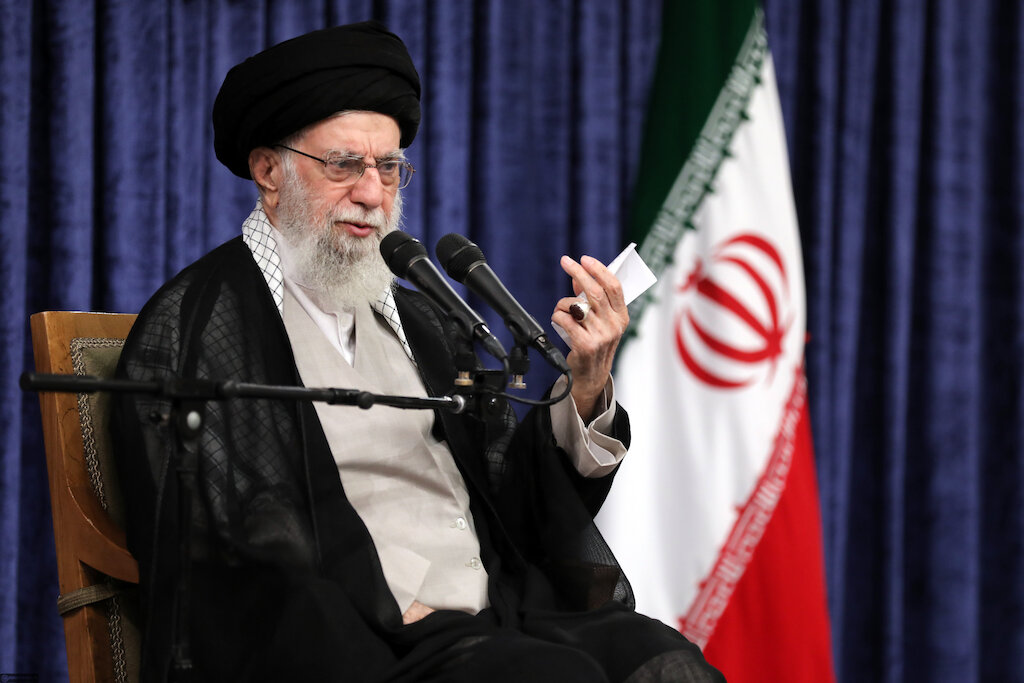
MIDDLE EAST - Iranian state media confirmed Supreme Leader Ayatollah Ali Khamenei’s death following US-Israeli airstrikes on February 28. Khamenei, 86, was killed in strikes on his Tehran compound. The confirmation came after initial denials by Iranian officials.
US President Donald Trump announced Khamenei’s death on Truth Social, stating it “is not only Justice for the people of Iran, but for all Great Americans.” Israeli Prime Minister Benjamin Netanyahu noted growing signs of Khamenei’s demise. Iranian Foreign Minister Abbas Araghchi initially denied the claim.
Seismic data from NORSAR and CTBTO verified the strikes. Iranian media reported over 200 deaths, including civilians. No independent verification of these figures exists. International responses called for de-escalation. UN Secretary-General António Guterres condemned the military escalation and called for an immediate cessation of hostilities. Gulf states reported interceptions during ongoing strikes.
Confirmation of Khamenei’s Death
Iranian state television confirmed Khamenei’s death and declared 40 days of national mourning, with reports indicating that his daughter, grandson, and son-in-law were among those killed, though the Assembly of Experts has not convened publicly to address succession.
US officials stated the strikes specifically targeted leadership sites, while Israeli sources cited debris recoveries as confirmation of casualties, and Iranian media broadcasted mourning footage across state channels.
Celebrations appeared in districts of central Tehran even as IRGC units remained on heightened alert, suggesting internal divisions between the security apparatus and segments of the public.
Assessment: State media confirmation shifts the situation from disputed to verified, triggering succession protocols. Public celebrations in Tehran compare to reactions after Soleimani’s death in 2020, indicating internal divisions. Monitoring Assembly of Experts activity within 72 hours would signal succession timeline.
Ongoing Military Actions
US and Israeli forces launched additional strikes following the initial attacks, while Iranian retaliation targeted US bases in Bahrain, Qatar, UAE, Kuwait, Saudi Arabia, and Jordan, with no US casualties reported.
Iran fired ballistic missiles at northern Israel that were intercepted over Haifa, though fragments caused fires in residential neighborhoods in northern Haifa, and Houthi forces separately claimed attacks on Israeli ports.
Gulf airspaces closed temporarily as ADS-B data showed military movements over the region, and Flightradar24 indicated civilian diversions during the events. Launch paths matched exchanges from June 2025 conflict, which involved similar missile types and interception rates.
Strikes reportedly targeted missile production facilities at Isfahan and Parchin, according to CENTCOM.
Assessment: US and Israeli strikes align with June 2025 patterns, reducing Iranian missile production by targeting facilities at Isfahan and Parchin. Iranian launches engaging multiple states expand the conflict scope beyond 2025 levels. Maxar imagery over 48 hours would reveal site reconstitution efforts.
IRGC and Regional Responses
The IRGC announced what it described as its most intensive offensive against US and Israeli positions, with official statements promising severe punishment for those responsible for Khamenei’s death, though no specific military actions beyond ongoing strikes were detailed.
Hezbollah and Iraqi militias reportedly targeted positions in a coordinated response, while Houthi leadership announced the resumption of attacks on Red Sea shipping, though positions across Lebanon and Syria remained largely unchanged.
International reactions varied, with British officials urging restraint, China issuing formal protests against the strikes, and UN representatives citing potential breaches of international law.
Assessment: IRGC announcements parallel statements after Soleimani’s 2020 death, signaling proxy escalation. Regional militia involvement matches 2025 patterns, risking broader conflict. Houthi X posts within 72 hours would verify operational claims.
What to Watch
Assembly of Experts emergency session within 72 hours via official IRNA announcements.
IRGC missile launches over 48 hours tracked by ADS-B Exchange.
Maxar satellite imagery of Tehran compound within 24 hours for damage assessment.
NOTAM updates in Persian Gulf airspace over 7 days for continued operations.
Official Statements
Donald Trump, US President, February 28: “Khamenei, one of the most evil people in History, is dead. This is not only Justice for the people of Iran, but for all Great Americans, and those people from many Countries throughout the World, that have been killed or mutilated by Khamenei and his gang of bloodthirsty THUGS.”
Benjamin Netanyahu, Israeli Prime Minister, February 28: “There are growing signs that this tyrant is no longer with us.”
Israeli Official, February 28: “Khamenei is dead, his body has been found.”
Abbas Araghchi, Iranian Foreign Minister, February 28: “As far as I know, Khamenei is still alive.”
Israel Katz, Israeli Defense Minister, February 28: “The State of Israel launched a pre-emptive attack against Iran to remove threats.”
IRGC Statement, March 1: “The hand of revenge of the Iranian nation for a severe, decisive and regrettable punishment for the murderers of the Imam of the Ummah will not let go of them. The Islamic Revolutionary Guard Corps, the Armed Forces of the Islamic Republic of Iran, and the vast popular Basij forces will powerfully continue the path of their leader in defending his legacy, standing firm against internal and external plots and delivering a lesson-giving punishment to aggressors against the Islamic homeland.”
António Guterres, UN Secretary-General, February 28: “I condemn today’s military escalation in the Middle East. The use of force by the United States & Israel against Iran, and the subsequent retaliation by Iran across the region, undermine international peace & security.”
Brad Cooper, CENTCOM Commander, February 28: “The President ordered a bold action, and our brave Soldiers, Sailors, Airmen, Marines, Guardians, and Coast Guardsmen are answering the call.”
Pete Hegseth, Secretary of War, March 1: “Overnight, on President Trump’s orders, the Department of War commenced OPERATION EPIC FURY - the most lethal, most complex, and most-precision aerial operation in history. The Iranian regime had their chance, yet refused to make a deal - and now they are suffering the consequences. For almost fifty years, Iran has targeted and killed Americans, always seeking the world’s most powerful weapons to further their radical cause. Last night, unlike any previous president, President Trump began dealing with this cancer. We will not tolerate powerful missiles targeting the American people. Those missiles will be destroyed, along with Iran’s missile production. The Iranian navy will be destroyed. And, as President Trump has said his entire life, Iran will never have a nuclear weapon. The United States did not start this conflict, but we will finish it. If you kill or threaten Americans, anywhere in the world - as Iran has - then we will hunt you down, and we will kill you. Our warriors are the best in the world, and they are fully unleashed to achieve our objectives. May God’s providence protect them in this vital mission."
Full Report & Analysis
The full report includes expert analysis and risk assessment.
Full Report & Analysis →