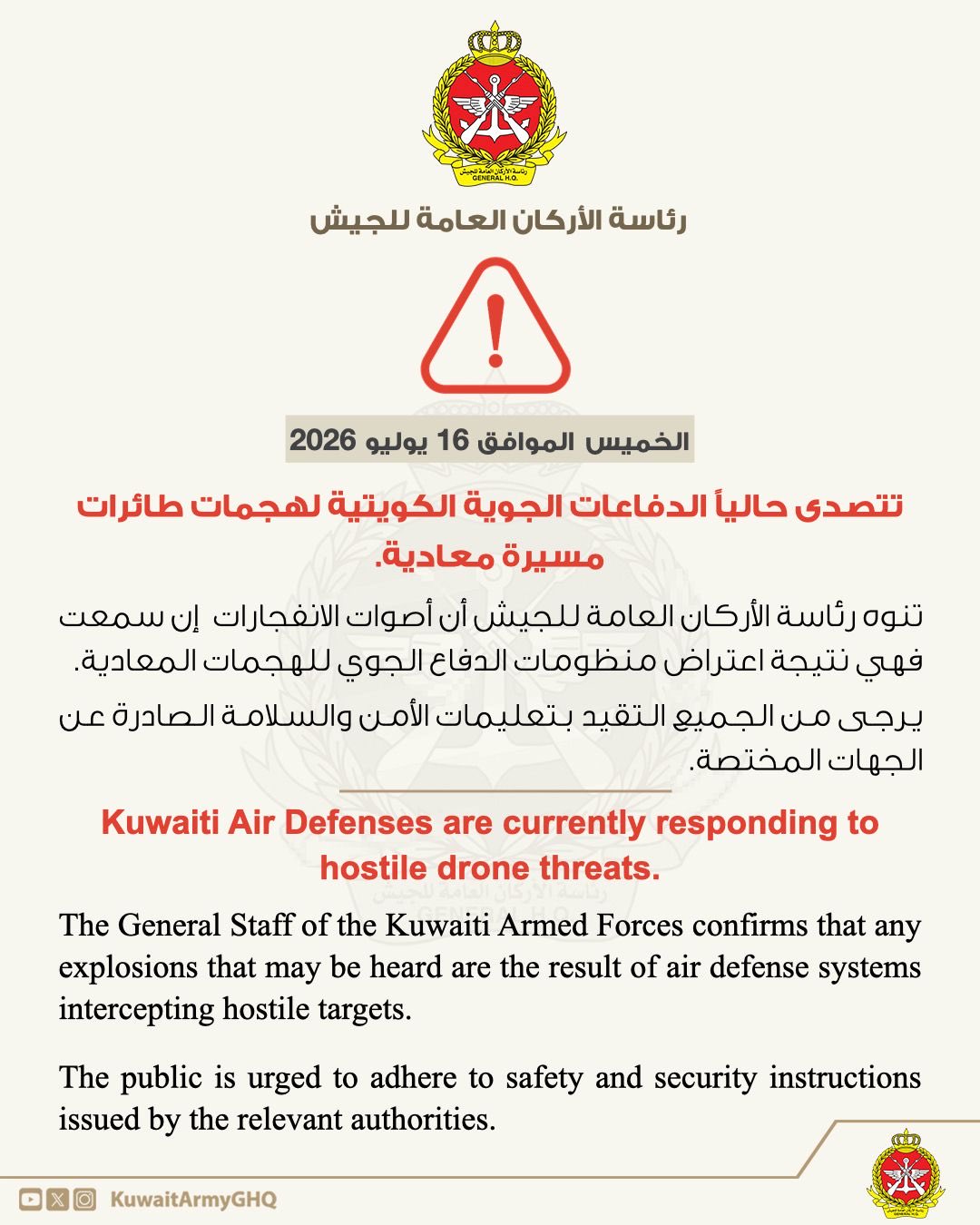
U.S. Central Command Disables Oil Tanker and Strikes Iranian Targets in Arabian Gulf, Kuwait Intercepts Drones
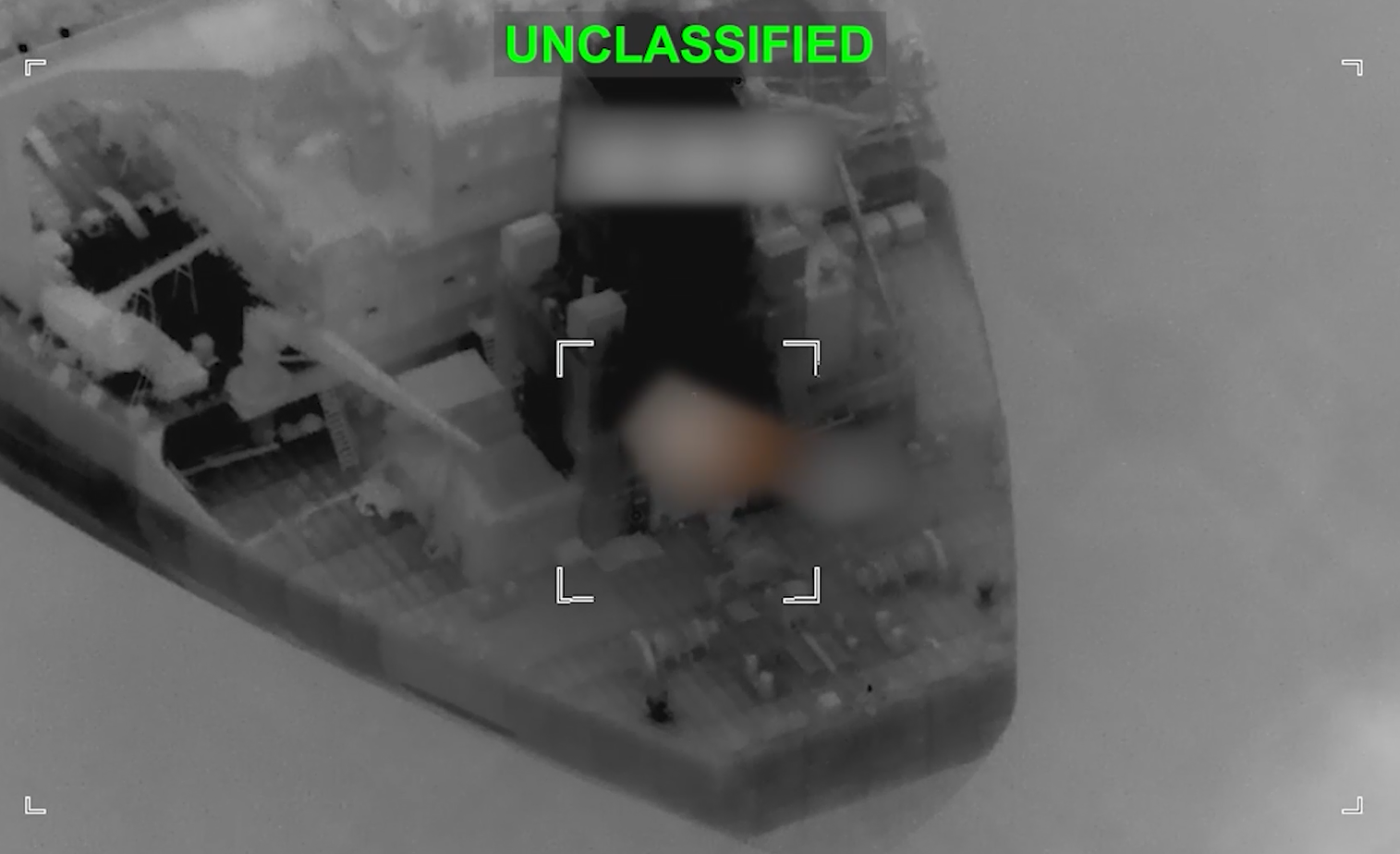
ARABIAN GULF — On July 15, CENTCOM forces disabled a Curacao-flagged oil tanker in the Arabian Gulf after it ignored multiple warnings while attempting to transit toward an Iranian port in violation of a naval blockade reimposed the previous day.
A short while later, U.S. forces launched a second wave of strikes targeting Iranian military capabilities used to threaten vessels transiting the Strait of Hormuz.
U.S. Central Command stated that forces observed the unladen M/T Belma transiting international waters toward Kharg Island.
The vessel continued its course despite warnings. A U.S. aircraft then fired AGM-114 Hellfire (air-to-ground missile) missiles into the ship’s smokestack, rendering it inoperable.
The action marked the first disablement of a vessel since the blockade resumed. Two other commercial vessels were redirected during the initial 24-hour period.
U.S. Military Strike Operations Against Iranian Military Targets, Kuwait Intercepts Drones
On July 15, CENTCOM forces began a wave of strikes against Iran targeting military capabilities used to attack commercial shipping in the Strait of Hormuz.
U.S. forces launched operations for a second wave of strikes targeting Iranian military capabilities used to threaten vessels freely transiting the Strait of Hormuz, an international waterway important to global commerce.
CENTCOM noted the actions hold Iran accountable “at the Commander in Chief’s direction.” On July 14, U.S. forces struck Iranian military targets in Bandar Abbas, Khormuj, Ahvaz, Qeshm, Tunb, Bushehr, and Kuh-e Stak to degrade Iran’s ability to attack commercial shipping in the Strait of Hormuz.
Iranian Responses
Iranian officials and the Islamic Revolutionary Guard Corps stated they will close the Strait of Hormuz until American hostilities end and will shut down the United Arab Emirates’ (UAE) Fujairah pipeline and Saudi Arabia’s East-West pipeline. Iranian officials stated that energy exports from the region will be for everyone or for no one.
Iranian state media reported that an IRGC Navy commander stated that “by maintaining the strategy of keeping the Strait of Hormuz closed, forces will inflict the most severe blows on the aggressor enemy.”
It also reported that U.S. forces struck a civilian wheat storage facility in Hoveyzeh on July 14. CENTCOM noted this claim is false and that U.S. forces instead hit the military targets listed above on July 14.
Supporting U.S. Naval Operations
U.S. sailors conducted nighttime flight operations aboard the USS George H.W. Bush while the carrier transited the Arabian Sea on July 15.
These operations occurred in that body of water adjacent to the areas of the blockade enforcement and strikes, as documented in CENTCOM imagery and statements from July 15.
The carrier presence provides sustained air support capacity for ongoing maritime interdiction tasks in the region. The deployment sustains operational reach for follow-up requirements tied to the July 14-15 actions.
Assessment: The carrier operations occurred in the Arabian Sea adjacent to the areas of the blockade enforcement and strikes. This deployment sustains operational reach for follow-up requirements tied to the July 14-15 actions. Continued flight activity serves as an indicator of sustained presence that can be monitored through official updates.
Official Statements
-
U.S. Central Command Press Release, July 13: “TAMPA, Fla. — At the Commander in Chief’s direction, U.S. Central Command (CENTCOM) forces will resume blockading maritime traffic entering and exiting Iranian ports on July 14 at 4 p.m. ET. CENTCOM forces will enforce the blockade against vessels transiting to or from Iranian ports and coastal areas. All mariners are advised to monitor Notice to Mariners broadcasts and contact U.S. naval forces on bridge-to-bridge channel 16 when operating in the Gulf of Oman and Strait of Hormuz approaches. The resumption of the U.S. blockade against Iran follows the initial implementation from April 13 to June 18. CENTCOM forces redirected more than 140 compliant vessels, disabled nine non-compliant ships, and allowed over 50 commercial vessels supporting humanitarian aid to pass through the blockade during the two-month period.”
-
U.S. Central Command, July 15: “TAMPA, Fla. — U.S. forces enforced naval blockade measures against Iran, July 15, by disabling an unladen oil tanker attempting to sail toward an Iranian port in the Arabian Gulf. U.S. Central Command (CENTCOM) forces observed Curacao-flagged M/T Belma transiting international waters toward Kharg Island. The commercial vessel ignored multiple warnings as it attempted to violate the U.S. blockade. A U.S. aircraft disabled the vessel after firing hellfire missiles into the ship’s smokestack. The ship is no longer transiting to Iran. U.S. forces resumed the naval blockade against vessels transiting to or from Iranian ports and coastal areas at 4 p.m. ET on July 14. During the first 24 hours of enforcement, CENTCOM has redirected two compliant commercial vessels and disabled one non-compliant vessel. U.S. forces remain vigilant and prepared to ensure full compliance.”
-
U.S. Central Command, July 15: “At 3 p.m. ET, U.S. forces launched operations for a second wave of strikes today against Iran. The strikes are targeting Iranian military capabilities used to threaten vessels freely transiting through the Strait of Hormuz, an international waterway vital to global commerce. The U.S. military is holding Iran accountable at the Commander in Chief’s direction.”
-
U.S. Central Command, July 15: “U.S. sailors conduct nighttime flight operations aboard USS George H.W. Bush (CVN 77) while transiting the Arabian Sea.”
-
U.S. Central Command, July 15: “CLAIM: Iranian state media reported that U.S. forces struck a civilian wheat storage facility in Hoveyzeh on July 14. This is FALSE. TRUTH: On July 14, U.S. forces hit Iranian military targets in Bandar Abbas, Khormuj, Ahvaz, Qeshm, Tunb, Bushehr, and Kuh-e Stak to degrade Iran’s ability to attack commercial shipping in the Strait of Hormuz. Meanwhile, Iran has targeted innocent civilians transiting the strait and in neighboring Gulf countries.”
-
U.S. Central Command, July 15: “Since restarting the naval blockade against Iranian ports 17 hours ago, U.S. forces have redirected 2 commercial vessels attempting to run the blockade. The U.S. military remains vigilant and prepared to ensure full compliance.”
Full Report & Analysis
The full report includes expert analysis and risk assessment.
Full Report & Analysis →