
U.S. Orders GBU-57 Bombs to Replenish Stockpile and Deploys USS Gerald R. Ford Carrier Strike Group To Middle East
MIDDLE EAST - The U.S. Department of War has issued an order for GBU-57 Massive Ordnance Penetrator bombs to restore operational readiness following their use in Operation Midnight Hammer against Iranian nuclear facilities on June 21.
This operation involved B-2 Spirit bombers dropping 14 of these 30,000-pound bunker-busters on the Fordow and Natanz sites, with additional Tomahawk missiles targeting Isfahan and air defense positions.
Battle damage assessments indicated severe destruction, setting back Iran’s nuclear program significantly. The procurement addresses the depletion of approximately 70 percent of the existing inventory, ensuring sustained capability for similar missions.
The strikes marked the first operational employment of the GBU-57, designed specifically for hardened underground targets like Iran’s nuclear infrastructure.
U.S. Central Command coordinated over 125 aircraft, including stealth bombers from Whiteman Air Force Base, Missouri, which flew nonstop for 37 hours. The mission neutralized key enrichment facilities without pursuing regime change, leading to a ceasefire after the 12-day conflict.
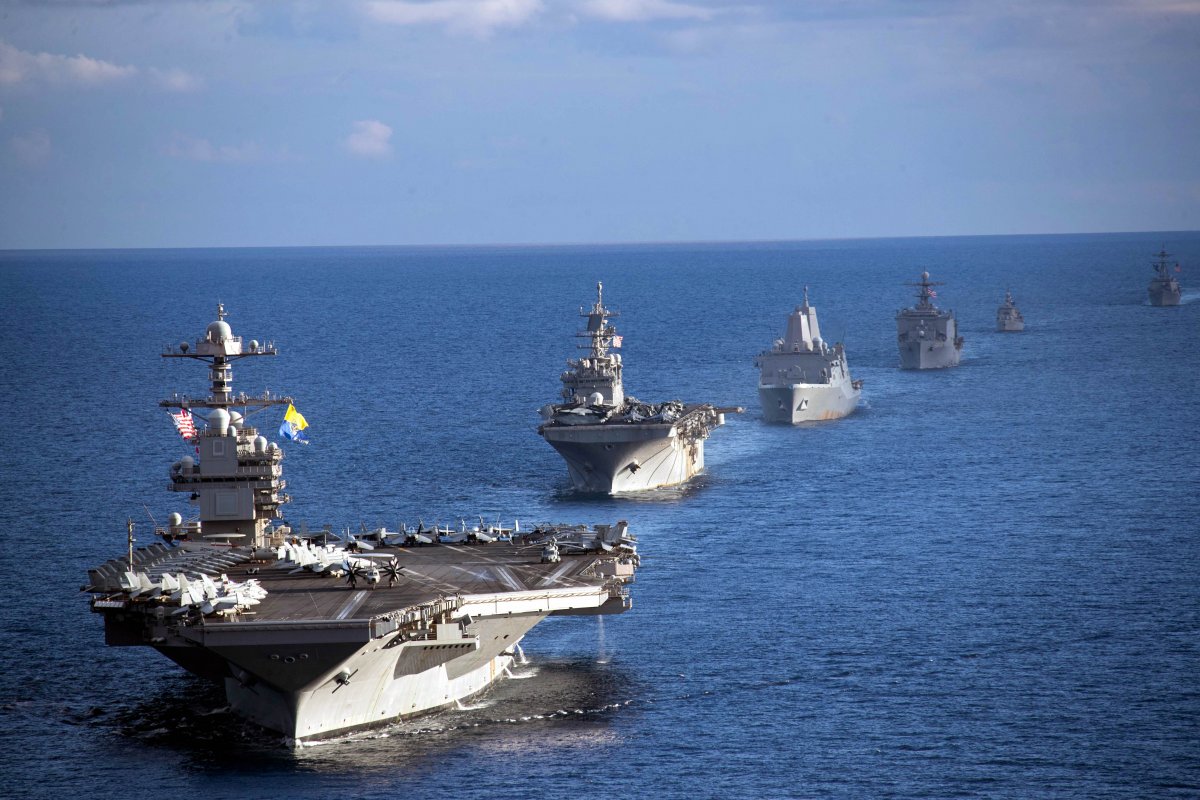
In parallel developments, the USS Gerald R. Ford carrier strike group has been ordered to deploy immediately to the Middle East, joining the USS Abraham Lincoln amid heightened regional tensions.
The Ford, arriving from the Caribbean, extends its operational presence, with no return to home ports anticipated until late April or early May. This move bolsters U.S. naval posture in the Arabian Sea and Mediterranean, supporting maritime security operations.
Carrier Deployments and Regional Posture
The USS Abraham Lincoln operates in the Arabian Sea as of February 7, supporting security missions. The USS Gerald R. Ford strike group, redirected from the Caribbean, enhances U.S. presence in the Mediterranean and Middle East.
This deployment, extending beyond standard durations, aligns with increased force posture to deter aggression and protect interests. The Ford’s move follows its role in counter-drug operations, now shifting to support negotiations with Iran.
The carrier group includes guided-missile destroyers equipped for ballistic missile defense and Tomahawk launches. This presence joins the Lincoln, marking two carriers in the region for the first time in nearly a year.
GBU-57 Production and Replenishment Timeline
The GBU-57 Massive Ordnance Penetrator is produced in limited quantities due to its specialized design, involving advanced materials and rigorous testing.
Historical production data indicates that initial units were delivered starting in 2011, with 16 bombs provided by November of that year. By 2015, the inventory included at least 20 units, reflecting a gradual buildup over several years.
Manufacturing a single GBU-57 involves complex processes, including forging high-strength steel casings and integrating guidance systems.
Estimates suggest that producing one unit could take approximately nine months, accounting for procurement, assembly, and quality assurance. Contracts for components, such as a 2019 award worth $90 million for warhead assemblies, highlight the time-intensive nature of production.
Replenishing a depleted stockpile, such as after expending 14 units, would likely require 18 to 24 months for delivery of a comparable quantity, based on past contract timelines.
For instance, a 2018 contract for sustainment was completed by 2023, spanning several years. The process relies on military-grade components not available commercially, necessitating dedicated facilities and supply chains.
The Air Force has initiated development of the Next Generation Penetrator as a successor, with prototypes expected within 18 to 24 months under recent contracts. This timeline aligns with the specialized, low-volume production approach for such munitions.
In Summary
Historical evidence points to 18-24 months or longer for full delivery. Public information is limited as much of it is classified for obvious reasons. The historical timeline does not take into account any methods that may be used to expedite manufacture/delivery
Full Report & Analysis
The full report includes expert analysis and risk assessment.
Full Report & Analysis →