Iran Issues Temporary Restriction On Airspace Access For Civilian Flights

TEHRAN - On January 14, 2026, Iran issued a temporary restriction on airspace access within the Tehran Flight Information Region, affecting aviation operations for a limited duration. This measure limited transit to pre-authorized international civil flights, reflecting precautionary controls amid regional security dynamics. The restriction aligned with established protocols managed by the Iran Civil Aviation Authority to regulate airspace during periods of elevated alert.
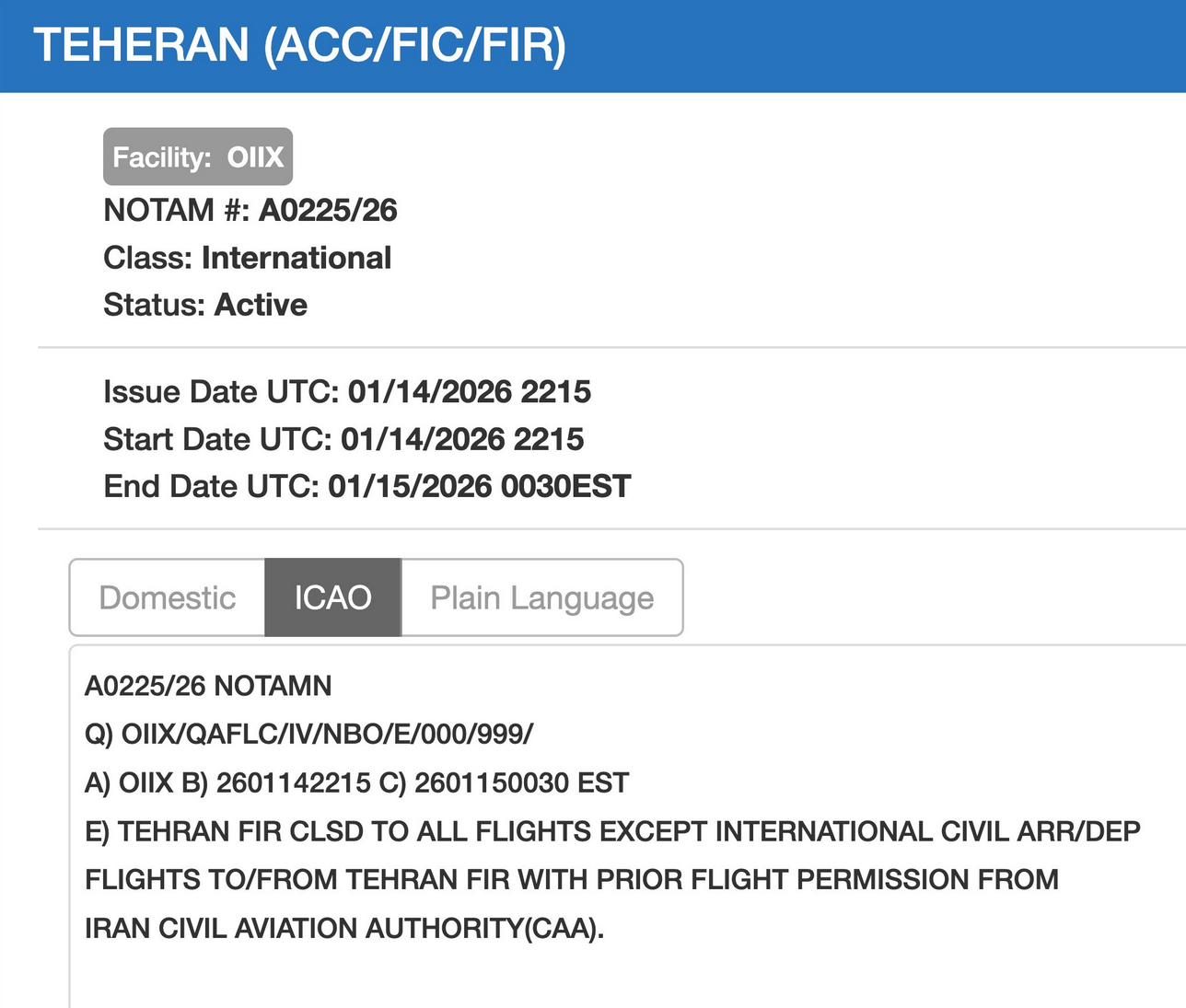
The core restriction closed the region to all flights except international civil arrivals and departures that obtained prior permission from the Iran Civil Aviation Authority. This selective closure permitted essential commercial operations while prohibiting overflights, domestic routes, and unauthorized international transit.
Such actions often correlate with military exercises or threat assessments, though specific triggers for this instance remain tied to official aviation notices without additional corroborative details from government releases. Analysis of the notice indicates a focused, short-term implementation, minimizing broader disruptions while prioritizing authorized traffic.
📢 Ad Placement (In-Article)This will show as an actual ad on the public site
From a security perspective, the measure aligns with precedents where authorities implement closures to support defense operations or respond to perceived threats. The exception for permitted international civil flights indicates an intent to balance security priorities with economic considerations, as complete shutdowns could disrupt trade and diplomacy.
In the context of ongoing regional tensions, this action may signal heightened vigilance, though it lacks indicators of escalation beyond the specified time-frame. Comparative analysis with prior restrictions in the area reveals consistent use of such notices for managed airspace, often without broader international repercussions.
In scenarios involving intensified activities, projections indicate a 20-30 percent likelihood of follow-on measures within the next week, informed by patterns in authority responses. Long-term stability hinges on de-escalation signals, with no current data pointing to sustained closures.