CENTCOM Strikes Three Iranian Tankers and Reports Missile Fire on U.S. Warships
MIDDLE EAST — U.S. Central Command said its forces struck three Iranian crude oil carriers on Sept. 5 after the Islamic Revolutionary Guard Corps launched ballistic missiles toward two U.S. Navy warships in regional waters.
The command said an aircraft carrier and a guided-missile destroyer evaded the incoming fire and that no American personnel were harmed.
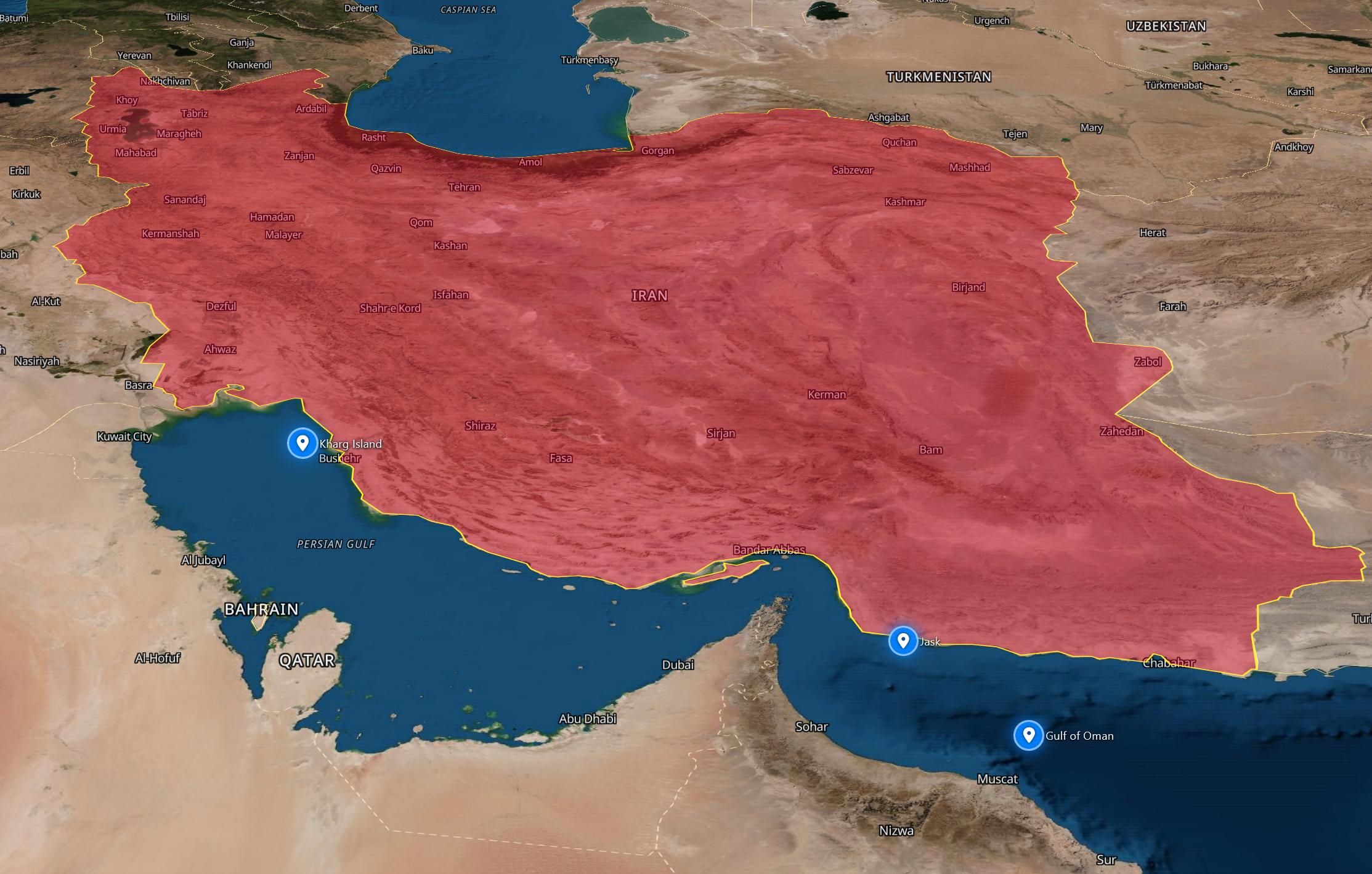
CENTCOM said it permanently disabled M/T Downy off Kharg Island and M/T Stark 1 near Jask, and that it completely destroyed the unladen M/T Kylo, also called Noxen, in the Gulf of Oman after directing the crew to abandon ship.
Adm. Brad Cooper, the CENTCOM commander, said U.S. forces would impose a higher economic cost if Iranian forces fired on American ships, and that the command would, if necessary, destroy Iran’s oil fleet.
Iran’s Foreign Ministry, in a Sept. 5 statement published by state-run Islamic Republic News Agency, said U.S. attacks on oil tankers anchored in Iranian waters violated Paragraph 4 of Article 2 of the United Nations Charter and called the strikes a war crime.
State-run Islamic Republic of Iran Broadcasting said one tanker was hit near Kharg Island with no casualties, and that two tankers were hit near Jask, one carrying oil and one empty, with crews taken to shore in lifeboats.
The Islamic Revolutionary Guard Corps Navy, in a later Sept. 5 statement published by those same state-run outlets, said it had targeted three oil tankers on what it called an unauthorized Strait of Hormuz route and three U.S.-affiliated vessels in other areas.
CENTCOM has not published a matching account of those later Iranian claims. U.S. Secretary of War Pete Hegseth said that if Iran shoots at U.S. ships, the United States will destroy and sink Iranian oil tankers.
The Sept. 5 exchange sits inside a campaign that began with U.S. and Israeli strikes on Iran on Feb. 28, followed by a U.S. naval blockade of Iranian ports from April 13, a pause in mid-June, and a resumption on July 14.
CENTCOM said on Sept. 4 that, as of Sept. 3, U.S. forces had redirected 87 commercial vessels, disabled three, and boarded two while enforcing the blockade.
USS Boxer (LHD 4), an amphibious assault ship with more than 2,600 Sailors and Marines embarked, and USS John Paul Jones (DDG 53) were among the ships CENTCOM identified as supporting that enforcement in early September.
Operational Snapshot
-
U.S. personnel: CENTCOM said no American personnel were harmed in the Sept. 5 inbound fire.
-
U.S. ships named in the salvo: An aircraft carrier and a guided-missile destroyer, hull names not released in the Sept. 5 CENTCOM release.
-
U.S. ships named on blockade duty: USS Boxer (LHD 4) with more than 2,600 Sailors and Marines embarked, and USS John Paul Jones (DDG 53).
-
Iranian hulls CENTCOM said it struck: M/T Downy disabled off Kharg, M/T Stark 1 disabled near Jask, M/T Kylo destroyed in the Gulf of Oman.
-
Official U.S. video record: Defense Visual Information Distribution Service story 574030 and video 1021952, visual information record identification number 260905-D-D0477-1016, 44 seconds, posted 9:40 a.m. Sept. 5, location undisclosed. Separate DVIDS title for Kylo sinking.
-
Iranian casualty note: Islamic Republic of Iran Broadcasting said no casualties on the Kharg tanker and that crews from the Jask pair went to shore in lifeboats. No CENTCOM crew-casualty figure.
-
Kharg range, state-run: Mehr said about 6 miles (10 km) off the island, four projectiles, crew evacuating. Hull unnamed in that item.
-
Follow-on Iranian claim: IRGC Navy said it targeted three unauthorized-route tankers and three U.S.-affiliated vessels. Unmatched by CENTCOM or UKMTO as of Sept. 6 at 5:48 PM UTC.
-
Blockade count: CENTCOM’s Sept. 3 count was 87 redirected, 3 disabled, and 2 boarded.
-
Hormuz week to Sept. 4, UKMTO: 80 outbound and 82 inbound Automatic Identification System-only full transits.
-
Civil advisory: State Department Iran advisory remains Level 4, Do Not Travel.
-
Sanctions status of the three hulls: The Office of Foreign Assets Control lists Downy and Stark 1 as National Iranian Tanker Company-linked [IRAN] property and listed Kylo (IMO 9189146) on July 30, 2025, as property of Kylo Shipping Inc.
Locations Affected
Kharg Island, Bushehr Province, Iran, sits in the Persian Gulf about 16 miles (25 km) off the Iranian mainland and about 300 miles (483 km) northwest of the Strait of Hormuz.
Published coordinates for the island are 29.24500, 50.31000. CENTCOM placed M/T Downy off this coast. Kharg is Iran’s principal crude-export terminal.
Mehr News Agency, Iranian state-run, said on Sept. 5 that an Iranian tanker about 6 miles (10 km) off Kharg Island was hit by four projectiles in the island’s anchorage and that the crew was evacuating. Mehr did not name the hull. That range is a state-run figure, not a CENTCOM coordinate.
Iran’s oil minister, Mohsen Paknejad, said in a presidential-site interview posted Sept. 3 that Kharg’s small geography took 550 attacks in the 40-day war and that crews kept loading ships. That figure is about the island and the terminal, not about Downy. It is the official Iranian wartime baseline for the same export node.
Jask, Hormozgan Province, Iran, is a port city on the Gulf of Oman at 25.65306, 57.78167. CENTCOM placed M/T Stark 1 near Jask. Iran has used Jask as an export node intended to move crude outside the Strait of Hormuz.
The Gulf of Oman, the waterway east of the Strait of Hormuz between Iran and the Arabian Peninsula, is where CENTCOM placed the unladen M/T Kylo.
Exact strike coordinates for the three hulls have not been released by CENTCOM, Iran’s Foreign Ministry, or United Kingdom Maritime Trade Operations (UKMTO).
Pakistan’s National Hydrographic Office, the NAVAREA IX coordinator, listed its in-force warnings on Saturday, Sept. 5. NAVAREA IX 306/26 and 307/26 remain the live Hormuz tanker-security warnings.
They name SIDR, also written SIDAR, at 26-26.10N 056-30.00E, about 1.7 nautical miles (2.0 miles / 3.1 km) north of Jazirat Tawakkul, and SENEGAL PROSPERITY at 26-18.80N 056-33.60E, about 4.5 nautical miles (5.2 miles / 8.3 km) south of Jazirat Musandam.
Those are separate Aug. 31 incidents, not the Sept. 5 Downy, Stark 1, or Kylo strikes. The Sept. 5 in-force list does not name those three Iranian hulls.
The U.S. Energy Information Administration (EIA), in its World Oil Transit Chokepoints note last updated March 3, put first-half 2025 oil flows through the Strait of Hormuz at 20.9 million barrels per day, about 20 percent of global petroleum-liquids consumption.
Saudi and UAE pipelines that bypass the strait were listed at about 4.7 million barrels per day of combined capacity. Those figures predate the current campaign and describe the corridor these three hulls sit on.
Latest Developments
-
Defense Visual Information Distribution Service (DVIDS) posted the CENTCOM text at 9:40 a.m. Sept. 5 as story 574030 and posted a 44-second clip, visual information record identification number 260905-D-D0477-1016, from an undisclosed location. DVIDS also lists a separate title, M/T Kylo Sinking in the Gulf of Oman.
-
The Department of War public calendar for Sept. 5 listed no Hegseth events, no department releases, and no transcripts.
-
SHANA, the oil ministry’s official service, published Oil Minister Paknejad on Sept. 5 on staff services and winter gas. That item did not name Downy, Stark 1, or Kylo.
-
The U.S. Treasury on Sept. 4 designated a Turkey-based bank and subsidiaries under Operation Economic Outcast, one day before the tanker strikes.
-
A different event: CENTCOM on Sept. 1 posted that it had completed strikes on IRGC targets in Iran. That release is not the Sept. 5 tanker action.
Tehran Records the Hits and Claims Follow-On Fire
Islamic Republic News Agency published the Iranian Foreign Ministry statement on Sept. 5. The ministry said the overnight attacks on tankers anchored in Iranian waters were a continuation of what it called a U.S. war of aggression and a blockade of Iran’s maritime trade.
It said the attacks “constitute a clear violation of Paragraph 4 of Article 2 of the United Nations Charter, constitute a war crime, and represent an overt threat to international peace and the security of commercial shipping.”
It also said Iran would defend its sovereignty and that the United States and its partners would be responsible for the consequences.
Threat Indicators
-
Confirmed: CENTCOM and Iranian official channels both record U.S. strikes on three Iranian oil tankers on Sept. 5 at Kharg, Jask, and the Gulf of Oman.
-
Confirmed: DVIDS posted the same text as story 574030 and filed 44-second video 1021952, visual information record identification number 260905-D-D0477-1016, including a Kylo-sinking title.
-
Confirmed: CENTCOM’s Sept. 3 blockade tally stands at 87 commercial vessels redirected, three disabled, and two boarded.
-
Confirmed: The Office of Foreign Assets Control already listed Downy and Stark 1 as National Iranian Tanker Company-linked [IRAN] vessels and listed Kylo IMO 9189146 in the July 30, 2025, Shamkhani package.
-
Confirmed: NAVAREA IX 306/26 and 307/26 were still the live Hormuz tanker warnings on Sept. 5 and did not name the three CENTCOM hulls.
-
Confirmed: The Department of War’s Sept. 5 public calendar carried no department release or transcript on the tanker strikes.
-
Tripwire: IRGC ballistic missiles launched toward a U.S. aircraft carrier and a guided-missile destroyer, according to CENTCOM’s Sept. 5 release.
-
Tripwire: IRGC Navy statement that further unauthorized Hormuz transits will be targeted.
-
Early signal: Hegseth extended tanker targeting to the Pacific Command area, not only regional waters.
-
Early signal: Cooper’s stated 2-for-3 reply rule, now on the public record as command guidance.
-
Early signal: Treasury’s Sept. 4 Outcast designations against a Turkey-based bank one day before the tanker strikes.
-
Ongoing: U.S. naval blockade of Iranian ports, resumed July 14, with USS Boxer and USS John Paul Jones publicly tied to enforcement.
-
Ongoing: UKMTO Sept. 4 baseline of SEVERE Hormuz risk, Automatic Identification System transits about 90 percent below pre-conflict levels, and 80 outbound plus 82 inbound Automatic Identification System-only full transits in the week to Sept. 4.
-
Ongoing: State Department Iran advisory remains Level 4, Do Not Travel, with no Sept. 5 change posted.
Official Statements
-
Adm. Brad Cooper, Commander, U.S. Central Command, Sept. 5: “We will not hesitate to defend American forces, and if necessary, destroy Iran’s limited and exposed oil fleet.”
-
Pete Hegseth, U.S. Secretary of War, Sept. 5: “It’s simple: if Iran shoots at U.S. ships, we will destroy (and sink) their oil tankers. All they have to do is not shoot at [the U.S. Navy].”
-
Scott Bessent, U.S. Secretary of the Treasury, Sept. 4: “Financial institutions continue to find out the hard way that we are serious about Operation Economic Outcast.”
-
Iranian Foreign Ministry, statement published by Islamic Republic News Agency, Sept. 5: “constitute a clear violation of Paragraph 4 of Article 2 of the United Nations Charter, constitute a war crime, and represent an overt threat to international peace and the security of commercial shipping.”
-
IRGC Navy, statement published by Islamic Republic News Agency, Sept. 5: “This morning, the terrorist and aggressor US military attacked three oil tankers belonging to the Islamic Republic of Iran, causing damage.”
-
IRGC Navy, statement published by Islamic Republic of Iran Broadcasting, Sept. 5: “Do not be deceived by the American terrorist army and avoid any suspicious movement to cross unauthorised waterways, otherwise you will be targeted.”
-
No official statement from the White House on the Sept. 5 tanker strikes as of Sept. 6 at 5:48 PM UTC.
-
No Department of War release or transcript on the Sept. 5 tanker strikes as of the department’s Sept. 5 public calendar.
-
No official statement from the International Maritime Organization or United Kingdom Maritime Trade Operations matching the three named hulls as of Sept. 6 at 5:48 PM UTC.
-
No official statement from the National Iranian Tanker Company or the Comoros flag administration on the three hulls as of Sept. 6 at 5:48 PM UTC.
-
No U.N. spokesman item naming the three hulls as of Sept. 6 at 5:48 PM UTC.
-
No Chinese Foreign Ministry item naming the three hulls as of Sept. 6 at 5:48 PM UTC.
Full Report & Analysis
The full report includes expert analysis and risk assessment.
Full Report & Analysis →