Western North America Wildfires at Peak Resource Levels as British Columbia Declares State of Emergency
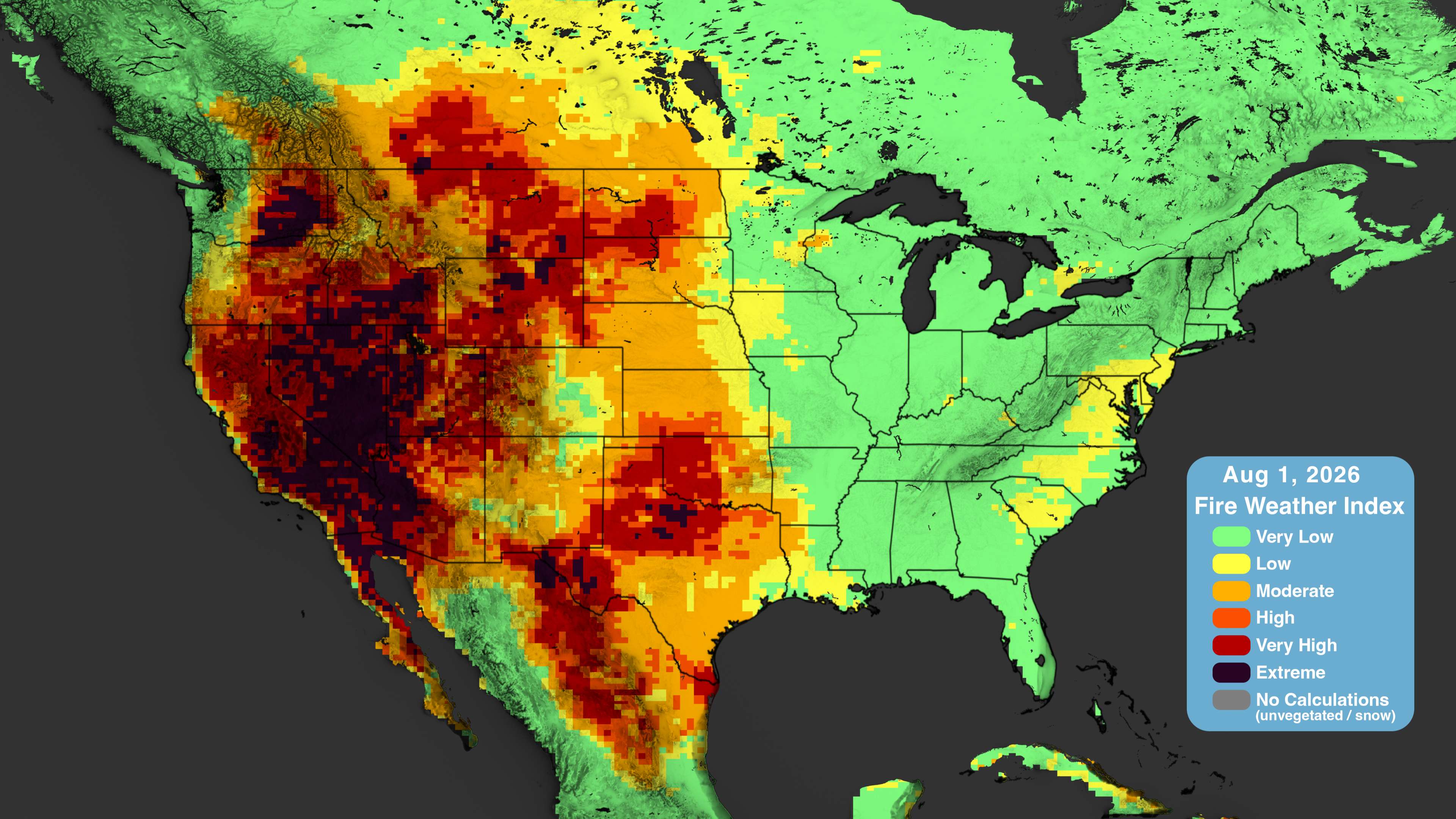
NORTH AMERICA — On August 8 the National Interagency Fire Center said 97 large fires remained under containment efforts across the United States, with 83 new fires and 9 new large fires recorded in the preceding 24 hours, while British Columbia authorities stated a provincial state of emergency after the Bald Range fire forced the evacuation of the District of Summerland and surrounding areas.
The U.S. total of personnel assigned stood at 30,636, including 661 crews, 1,856 engines and 204 helicopters, according to the National Interagency Fire Center National Fire News of August 8. Twenty-six complex incident management teams and one national incident management organization were committed.
August Satellite Footage Of Wildfires Burning In Washington and Oregon
Year-to-date U.S. figures reached 45,659 fires and 6,266,601 acres burned, according to the same National Fire News release. National Preparedness Level remained at 5.
In Canada, the Canadian Wildland Fire Information System listed 4,582 fires year-to-date and 3,988,371 hectares burned as of August 8, with 625 active fires.
National Preparedness Level stood at 5, with British Columbia at Agency Preparedness Level 5 and Ontario at 4. New fires that day totaled 25, of which 14 were human-caused, 1 natural and 10 undetermined.
British Columbia listed 105 active wildfires, of which 52 were out of control.
The Bald Range fire, discovered the afternoon of August 7 west of Summerland, grew under southwest winds to an estimated 9,500 hectares by the morning of August 8 and remained out of control.
EmergencyInfoBC and the Office of the Premier placed roughly 21,700 people under evacuation order and an additional 9,700 under alert.
Air evacuations continued for isolated residents. Interior Health relocated 48 residents from the Dr. Andrew Pavilion long-term care home and 190 residents from Summerland Seniors Village.
United States Fire Load Concentrated in Northwest and Northern Rockies
Oregon accounted for 26 of the 97 large fires, Washington 19, Montana 11 and Idaho 8, according to the National Interagency Fire Center. Key incidents include:
-
Big Grass fire (Oregon): 442,316 acres, 41 percent contained
-
Rowe Creek Complex (Oregon): 357,895 acres, 73 percent contained
-
Little Giant fire (Washington): 97,539 acres, 1 percent contained (August 8 infrared mapping)
The Little Giant fire, started by lightning on July 15, threatened 1,849 structures. Official InciWeb figures list zero structures destroyed and two injuries. It carried a Red Flag Warning through the evening of August 8 for breezy ridgetop winds and critically dry humidities.
The Kaiser Canyon fire on the Colville Reservation stood at 137,616 to 138,616 acres and 54 percent contained, also lightning-caused, with structure protection continuing along Highways 21 and 155 under a separate Red Flag Warning.
California, Colorado, Nevada and New Mexico each listed multiple large fires. Minnesota and Florida contributed smaller loads. Fuels and fire-behavior advisories were in effect for southwest Idaho and eastern Nevada–central Utah.
Predictive services cited hot, unstable conditions with relative humidity of 3-15 percent, extended burn periods and gusty winds of 25-40 mph across the northern West.
Year-to-date acreage of 6.27 million already exceeded the comparable 2025 total of 3.55 million acres and the 2024 total of 4.98 million acres.
Assessment:Oregon and Washington continue to hold the largest share of the national large-fire count. Lightning remains the documented cause for several of the biggest active incidents in the Northwest. The combination of high acreage, low containment on key fires, and Red Flag conditions keeps national resource demand elevated.
British Columbia Declares Provincial Emergency After Rapid Growth of Bald Range Fire
Premier David Eby said on August 8 that the Bald Range fire, first noted the previous evening, had grown rapidly as winds intensified and pushed into the Summerland area.
Minister of Emergency Management and Climate Readiness Kelly Greene stated the provincial state of emergency to enable additional tools for travel restrictions and accommodation of evacuees.
The Regional District of Okanagan-Similkameen and the District of Summerland issued successive evacuation orders covering the entire District of Summerland (population more than 12,000) plus rural areas west to approximately kilometer 15 of the Princeton-Summerland Road, Garnet Valley and portions of Peachland.
Reception centers opened in Penticton and West Kelowna. Highway 97 was closed in segments near Peachland and Summerland, and Highway 1 remained closed between Yale and Boston Bar from earlier fires. An additional evacuation alert was issued by the Regional District of Okanagan-Similkameen on the afternoon of August 8 for further portions of Electoral Areas F and I.
BC Wildfire Service listed the Bald Range fire as out of control with rank 2–3 behavior expected to increase with daytime heating. Additional structure-protection units, heavy equipment and aircraft were being mobilized.
Other large fires of note:
-
Pear Lake fire near Clinton: more than 136,000 hectares; structures destroyed on approximately 120 properties within the Thompson-Nicola Regional District
-
Ainslie Creek fire (Brunswick Complex): continued growth
-
Bradley Creek fire (north Okanagan Lake): at least 230 properties destroyed on Okanagan Indian Band reserve lands (preliminary band estimate)
Structure losses on the Bald Range fire itself have not been released in official tallies as of August 8. Regional emergency officials and BC Wildfire Service stated that the extent of damage was still unknown.
Local accounts and video showed multiple structures and farms burned in the Faulder area west of Summerland, where 55 people required helicopter evacuation after ground access was cut off. Power outages affected Summerland.
Premier Eby noted significant losses of homes and property without providing a numerical total. Southeast District RCMP stated they are investigating a possible fatality reported by a resident of Meadow Valley; no confirmation of death has been issued.
Activity in Ontario and Other Canadian Jurisdictions
In northwestern Ontario, the Aviation, Forest Fire and Emergency Services listed 110 active wildfires as of August 8, with 15 not under control. The Rinker Complex comprises:
-
Thunder Bay 36: 301,240 hectares
-
Dryden 34: 45,800 hectares
-
Dryden 35: 31,510 hectares
The complex remained not under control and drew 22 firefighting crews from Ontario, Alberta, Nova Scotia and Mexico plus 17 helicopters.
Approximately 1,638 people from the region remained under evacuation, with 14 communities having been evacuated and six having returned. Alberta Wildfire stated that no wildfires of note were present in the Forest Protection Area as of August 7.
These loads sit alongside the British Columbia and U.S. Northwest activity under the same national preparedness posture at Level 5. International resources continue to move through the Canadian Interagency Forest Fire Centre.
Official Statements
-
Premier David Eby, August 8, 2026: “British Columbians are waking up today to devastating news from the South Okanagan. Since first reported early yesterday evening, the Bald Range wildfire has grown rapidly as winds intensified, pushing into the Summerland area and affecting communities throughout the surrounding valleys. We know there have been significant losses of homes and property. We also know that some people became trapped as conditions changed quickly.”
-
Premier David Eby, August 8, 2026: “The Bald Range fire was like a bomb going off in the Summerland region. Conditions are extremely dangerous, and changing minute by minute. The fires are moving incredibly quickly.”
-
Premier David Eby, August 8, 2026: “Homes have been lost, and properties have been destroyed. Some people became trapped as conditions changed very quickly, and needed to be rescued.”
-
Minister of Emergency Management and Climate Readiness Kelly Greene, August 8, 2026: “The conditions are clearly extremely volatile. We are expecting additional declining weather conditions.”
-
National Interagency Fire Center, National Fire News, August 8, 2026: “83 new fires were reported nationwide since yesterday, including 9 new large fires. Firefighters are currently working to contain 97 large fires across the country. There are 30,636 personnel assigned to incidents nationwide, including 661 crews, 1,856 engines, and 204 helicopters. 26 complex incident management teams and one national incident management organization are committed.”
-
Governor Bob Ferguson, Washington, August 4, 2026: “Our record-setting drought and high winds are creating dangerous conditions across the state. I am declaring an emergency to help prevent loss of life and property damage.”
-
Governor Bob Ferguson, Washington, August 4, 2026: “The declaration allows our federal partners to mobilize their resources and personnel to support our response, and unlocks resources for state, local and tribal governments.”
Full Report & Analysis
The full report includes expert analysis and risk assessment.
Full Report & Analysis →