U.S. Embassy Amman Reschedules Consular Appointments Under Ordered Departure
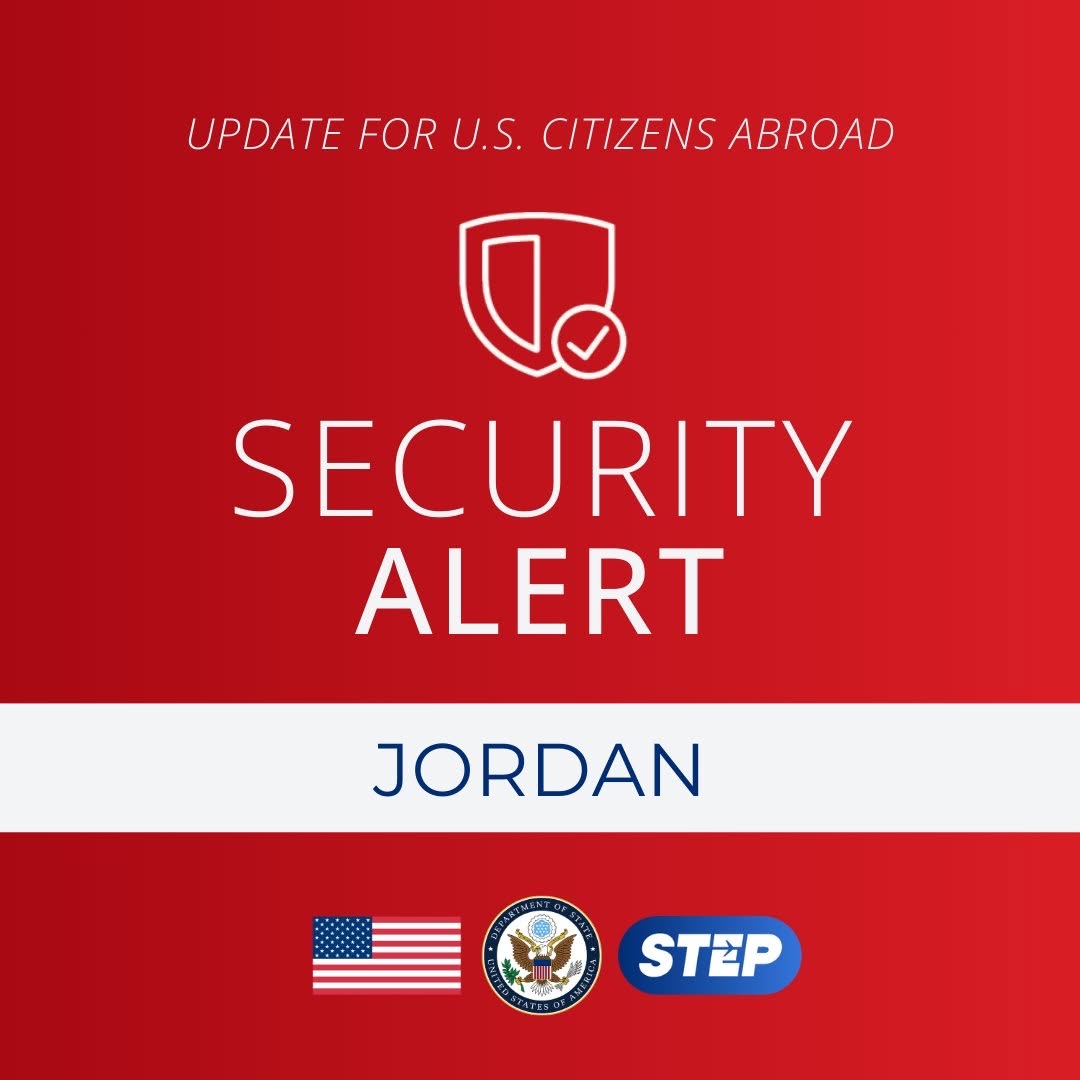
JORDAN — The U.S. Embassy in Amman stated on Wednesday that it is rescheduling some routine consular-related appointments out of an abundance of caution given continuing regional tensions, while remaining on ordered departure status since March 2.
The embassy reminded U.S. citizens that Iran has attacked civilian and critical infrastructure across the Middle East, including hotels, airports, diplomatic facilities, and other civilian locations.
U.S. citizens are directed to monitor Jordanian government information on specific threats, including sirens and other warnings, along with all Embassy travel advisories and guidance.
The Department of State ordered the departure of non-emergency U.S. government employees and their family members from Jordan on March 2 due to safety risks linked to hostilities that began February 28 between the United States and Iran.
The Jordan Travel Advisory remains at Level 3: Reconsider Travel due to terrorism and armed conflict. Multiple prior embassy alerts documented reports of missiles, drones, or rockets in Jordanian airspace, including on July 9, with instructions to seek overhead cover and shelter in place.
A July 19 alert noted Jordanian authorities evacuated the international airport and seaport in Aqaba due to a specific and credible threat, advising Americans to refrain from travel to either.
A July 20 worldwide caution from the Department of State advised Americans in the Middle East to exercise heightened vigilance and prepare for possible flight cancellations, periodic airspace closures, and travel disruptions, while noting that U.S. diplomatic facilities have been targeted and that Iran and groups supportive of Iran may target other U.S. interests.
On the same day as the embassy notice, U.S. Central Command (CENTCOM) reported that its forces began conducting strikes on military targets in Iran at 7 p.m. ET on July 21 for the 11th consecutive night.
The command said, “The strikes are designed to continue degrading Iran’s ability to threaten commercial shipping in the Strait of Hormuz.”
Iranian state media and the Islamic Revolutionary Guard Corps reported that Iranian forces targeted U.S. military facilities in Jordan, Kuwait, and Bahrain with drones and missiles.
Jordanian military reported interception of incoming projectiles on multiple recent dates, including four of six Iranian missiles launched toward the kingdom on Wednesday, with two others falling in remote uninhabited areas and no reported casualties or material damage from that incident. Plumes of smoke were visible overhead in Aqaba from the nearby Israeli city of Eilat.
The IRGC claimed the first phase of an operation targeted Prince Hassan Air Base and King Faisal Air Base in Jordan, asserting strikes on an F-15 aircraft preparation hangar, destruction of eight new MQ-9 drones in a drone preparation hangar, significant damage to two additional drones, heavy damage to two U.S. heavy helicopters in a storage hangar, and a strike on a facility housing U.S. personnel that killed and wounded several American troops.
The U.S. has not commented on those specific Iranian allegations.
Consular Operations and Ordered Departure Status
The embassy remains on ordered departure status first directed March 2. Limited American Citizen Services had resumed by appointment as of an April 13 alert, but the July 22 notice states that some routine consular-related appointments are being rescheduled.
Americans requiring emergency consular assistance are directed to contact Amman-ACS@state.gov.
The embassy address is listed as Al-Umawyeen 37, Amman, Jordan, with emergency phone numbers +962 6 590-6000 during business hours and +962 6 590-6500 after hours.
Earlier in the conflict, CENTCOM reported two American service members were killed and others wounded in an Iranian ballistic missile and drone attack on Muwaffaq Salti Air Base in Jordan on July 18, with a third service member later identified as believed killed in that incident.
Iranian statements claimed additional strikes on Jordanian bases hosting U.S. forces, including Prince Hassan Air Base and King Faisal Air Base, asserting damage to aircraft hangars, drones, and helicopters, though U.S. officials have not publicly stated confirmation of those specific claims.
Guidance for U.S. Citizens and Local Authorities
U.S. citizens are instructed to visit Jordan’s National Center for Security and Crisis Management website for public safety guidelines, including explanations of emergency sirens.
The first siren tone consists of three intermittent 30-second blasts signaling danger or imminent danger; the second is a continuous one-minute tone signaling all clear, typically followed by a voice message.
Additional actions include avoiding all demonstrations and large gatherings, avoiding areas with heavy police presence, monitoring local media, following local authority instructions, contacting airlines directly for any flight changes, exercising caution at locations publicly associated with the United States, and keeping a low profile.
Enrollment in the Smart Traveler Enrollment Program (STEP) is recommended to receive security updates and make embassy contact easier in an emergency.
The Department of State Consular Affairs contact is +1 202-501-4444 from abroad or 1-888-407-4747 from the U.S./Canada.
Jordanian Public Security Directorate statements have previously clarified accidental siren activations due to technical malfunction during maintenance and reissued guidelines on unidentified falling objects, directing citizens not to approach debris and to remain in place when sirens sound.
Recent Related Alerts and Concurrent Regional Activity
A July 17 embassy alert stated high tensions in the Middle East and advised Americans to reconsider travel to Jordan and through the region, while directing avoidance of military bases in Jordan.
The July 9 alert reported missiles, drones, or rockets in Jordanian airspace and ordered immediate overhead cover and shelter in place.
Jordanian Armed Forces stated on July 9 that air defenses intercepted and shot down eight missiles launched from Iran, with debris falling but no casualties or property damage.
Similar interceptions were reported by Jordanian military on July 20 and July 21, including three missiles and five drones according to available military statements.
On July 22 Jordanian military stated that four of six Iranian missiles launched toward the kingdom were intercepted, with two landing in uninhabited areas and no casualties or damage reported; sirens sounded in Aqaba and smoke was visible from Eilat.
These follow the pattern established after the February 28 onset of hostilities, which the travel advisory cites as the source of ongoing drone and missile attack threats and commercial flight disruptions.
Iranian statements described operations as responses to U.S. strikes, including claims of targeting U.S. command facilities and air bases in Jordan as part of sequential waves.
CENTCOM stated that the July 21 strikes beginning the 11th consecutive night continue to degrade Iran’s ability to threaten commercial shipping in the Strait of Hormuz.
Official Statements
-
U.S. Embassy Amman, July 22: “President Trump, Secretary of State Rubio, and the Department of State have no higher priority than the safety and security of American citizens. We remind U.S. citizens that Iran has attacked civilian and critical infrastructure across the Middle East, including hotels, airports, diplomatic facilities, and other civilian locations. Since March 2, the Embassy remains on ordered departure status. Out of an abundance of caution and given continuing regional tensions, the U.S. Embassy in Amman is rescheduling some routine consular-related appointments. U.S. citizens should continue to monitor information from the Jordanian government about specific threats and follow instructions, including sirens and other warnings. Please also monitor all Embassy travel advisories and guidance.”
-
U.S. Embassy Amman, July 19: “Due to a specific and credible threat, Jordanian authorities evacuated the international airport and seaport in Aqaba. We strongly advise all Americans to refrain traveling to either the airport or seaport. Continue to follow all Jordanian authorities’ security directives. U.S. Embassy Amman continues to advise all Americans to avoid travel to military bases in Jordan. On March 2, 2026, the Department of State ordered non-emergency U.S. government employees and their family members to leave Jordan due to safety risks.”
-
Department of State, July 20 (Worldwide Caution): “Due to heightened tensions in the Middle East, the security environment remains complex with the potential for unforeseen escalation. Americans currently in the Middle East should exercise caution and heightened vigilance and should be prepared for possible flight cancellations, periodic airspace closures, and potential travel disruptions. … U.S. diplomatic facilities, including outside the Middle East, have been targeted. Iran and groups supportive of Iran may target other U.S. interests overseas or at locations associated with the United States and Americans throughout the world.”
-
U.S. Central Command, July 21: “CENTCOM forces began striking military targets in Iran at 7 p.m. ET today for the 11th consecutive night. The strikes are designed to continue degrading Iran’s ability to threaten commercial shipping in the Strait of Hormuz.”
-
Jordan Armed Forces statement on July 9 interceptions: Air defence systems intercepted and shot down eight missiles launched from Iran towards Jordanian territory. The interceptions resulted in the fall of missile debris in several areas but caused no casualties or property damage. The armed forces remain at the highest level of operational readiness to protect the Kingdom’s airspace.
-
Jordanian military source on July 22 interceptions: Jordan’s military intercepted four of six Iranian missiles launched toward the kingdom, while two others fell in remote, uninhabited areas without causing casualties or damage.
Full Report & Analysis
The full report includes expert analysis and risk assessment.
Full Report & Analysis →