SOUTHCOM Strikes Three Narco-Trafficking Vessels in Eastern Pacific, Seven Killed
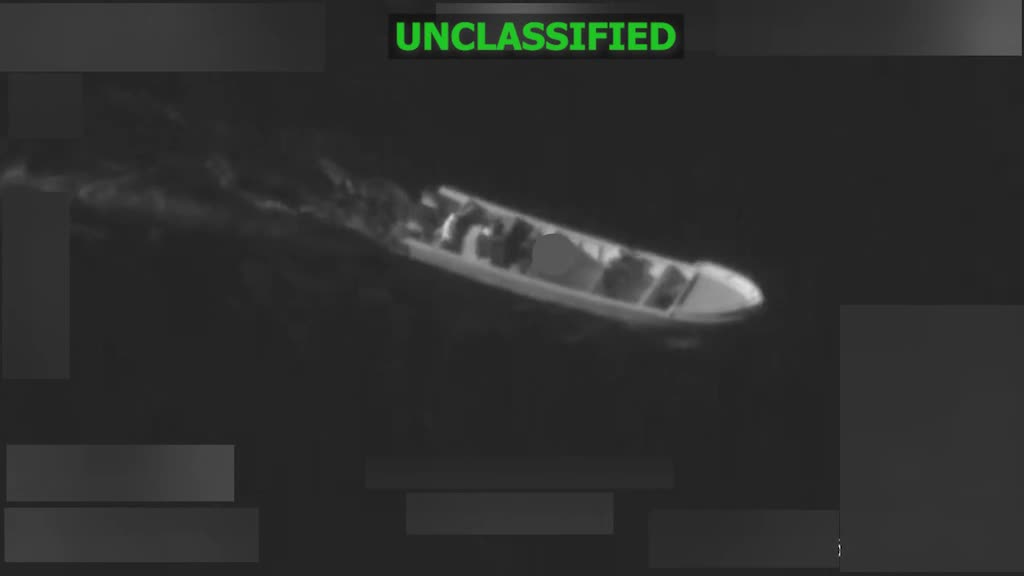
Surveillance footage of a vessel in the Eastern Pacific. Credit: U.S. Southern Command
EASTERN PACIFIC — U.S. Southern Command (SOUTHCOM) conducted three lethal kinetic strikes on narco-trafficking vessels in the Eastern Pacific on April 11 and April 13, killing a total of seven.
All three strikes were carried out by Joint Task Force Southern Spear “at the direction of the commander of U.S. Southern Command, Gen. Francis L. Donovan,” according to SOUTHCOM. SOUTHCOM said the operations were “applying total systemic friction on the cartels.”
“Intelligence confirmed the vessels were transiting along known narco-trafficking routes in the Eastern Pacific and were engaged in narco-trafficking operations,” SOUTHCOM stated in its April 12 press release. The command did not identify the specific Designated Terrorist Organizations operating the vessels.
The first strike killed two individuals SOUTHCOM identified as “male narco-terrorists.” One person survived the first strike. The second strike killed three. “No U.S. military forces were harmed,” according to the press release.
“Following the engagements, USSOUTHCOM immediately notified U.S. Coast Guard to activate the Search and Rescue system for the survivor,” the command reported.
Assessment: SOUTHCOM released the strike details without identifying vessel types, exact coordinates, or the specific organizations involved. The omissions are consistent with operational security for an ongoing campaign. The immediate Coast Guard notification for the surviving individual indicates adherence to search-and-rescue protocols alongside lethal operations.
April 13 Strike: Two Killed
SOUTHCOM announced on April 13 that Joint Task Force Southern Spear “conducted a lethal kinetic strike on a vessel operated by Designated Terrorist Organizations.” The command stated that “intelligence confirmed the vessel was transiting along known narco-trafficking routes in the Eastern Pacific and was engaged in narco-trafficking operations.”
“Two male narco-terrorists were killed during this action. No U.S. military forces were harmed,” SOUTHCOM announced.
Assessment: The April 13 strike occurred two days after the April 11 strikes, using identical language and the same command authority. The 48-hour interval between strikes indicates sustained operational tempo rather than an isolated action. Unlike the April 11 engagements, SOUTHCOM did not report any survivors or Coast Guard search-and-rescue activation for the April 13 strike.
Trump Links Narco Strikes to Iran Blockade Enforcement
U.S. President Donald Trump referenced the counter-narcotics strikes in a social media post about the U.S. naval blockade of Iranian ports. Trump said Iranian fast attack ships approaching the blockade “will be immediately ELIMINATED, using the same system of kill that we use against the drug dealers on boats at Sea. It is quick and brutal.”
He added: “98.2% of Drugs coming into the U.S. by Ocean or Sea have STOPPED!”
Assessment: Trump’s cross-reference connects two distinct SOUTHCOM and CENTCOM operations under a single enforcement framework. The phrase “same system of kill” implies shared tactics, platforms, or authorities between counter-narcotics interdiction and blockade enforcement. The 98.2% figure has not been independently verified in available sources.
What to Watch
- Further SOUTHCOM strike announcements: Three strikes over two days indicates sustained operational tempo under Joint Task Force Southern Spear.
- Survivor status: U.S. Coast Guard updates on the survivor from the first April 11 strike.
- Organization identification: Whether SOUTHCOM subsequently identifies the specific Designated Terrorist Organizations involved in any of the three strikes.
Full Report & Analysis
The full report includes expert analysis and risk assessment.
Full Report & Analysis →