U.S. Embassy Baghdad Issues 24-48 Hour Attack Warning as Iraqi Airspace Closes; Americans Directed to Depart by Land
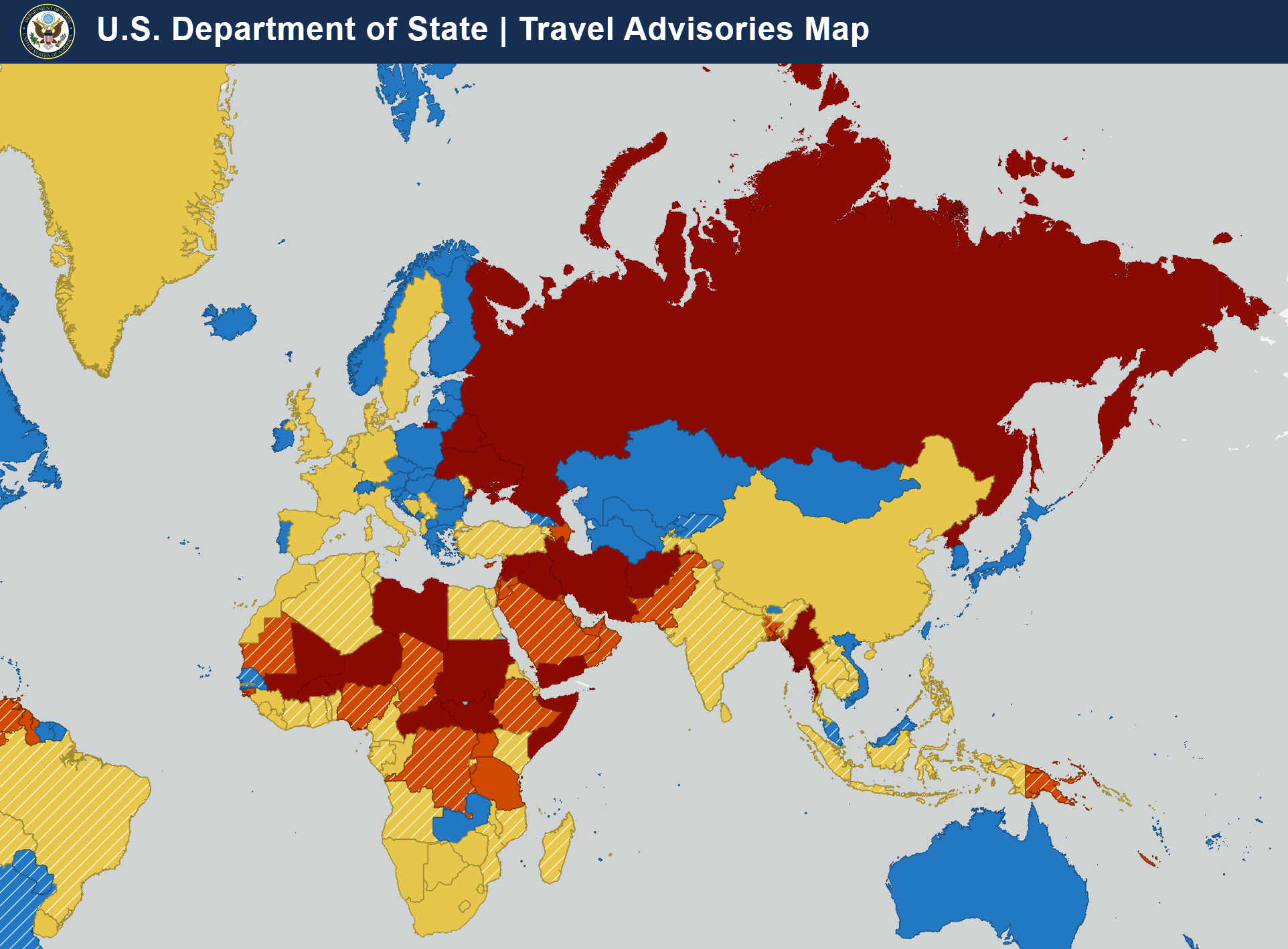
U.S. Department of State Travel Advisories Map showing Iraq at Level 4: Do Not Travel. Credit: U.S. Department of State
BAGHDAD — The U.S. Embassy in Baghdad issued a security alert on April 2 stating that Iran-aligned Iraqi militia groups may intend to carry out attacks in central Baghdad within the next 24-48 hours.
Iraqi airspace is closed and commercial flights are not operating out of Iraq. The Embassy directed all U.S. citizens in Iraq to leave immediately via available overland routes to Jordan, Kuwait, Saudi Arabia, or Türkiye.
Iran and its aligned militia groups have conducted widespread attacks against U.S. citizens and targets associated with the United States throughout Iraq, including in the Iraqi Kurdistan Region (IKR), according to the Embassy. All routine consular services at the U.S. Embassy Baghdad and the Consulate General in Erbil are suspended.
Some Embassy staff have been placed on ordered departure while the U.S. Mission in Iraq continues to operate. The Embassy noted that U.S. citizens choosing to remain in Iraq are doing so at significant risk.
The April 2 alert represents an escalation from a March 29 security alert in which Iran was identified as directing threats specifically at American universities in Baghdad, Sulaymaniyah, and Dohuk. The April 2 alert broadened the threat to all U.S.-associated targets in central Baghdad and added a specific 24-48 hour attack window.
Attack Warning: 24-48 Hour Window and Target Categories
The U.S. Embassy Baghdad security alert said: “Iraqi terrorist militia groups aligned with Iran may intend to conduct attacks in central Baghdad in the next 24-48 hours.” The following target categories were identified in the alert:
- U.S. citizens, businesses, and universities
- Diplomatic facilities
- Energy infrastructure
- Hotels and airports
- Other locations perceived to be associated with the United States
- Iraqi institutions and civilian targets
The alert noted that militia groups have targeted Americans for kidnapping, according to the U.S. Embassy Baghdad. The warning extends across all of Iraq, including the IKR.
Assessment: The target categories span both official and civilian U.S. presence, indicating the threat environment does not distinguish between diplomatic personnel and private U.S. nationals. The explicit citation of kidnapping as a tactic represents a distinct risk category from the mass-casualty scenarios associated with rocket and drone fire, requiring different protective measures for any U.S. nationals currently in-country.
Iraqi Airspace Closed; Overland Departure Routes Available
Iraqi airspace is closed and commercial flights are not operating out of Iraq, according to U.S. Embassy Baghdad communications issued April 2. The Embassy directed Americans to depart now via overland routes to four neighboring countries.
Travelers should expect long delays, according to the Embassy. Local ground transportation is functioning. The Embassy noted that airspace in neighboring countries may also be closed and that all departure information is subject to change.
- Jordan: Commercial flights are operating from Queen Alia International Airport (QAIA) in Amman, though flight disruptions are possible. Visas on arrival are available at the Iraq-Jordan land border, and U.S. citizens may also apply through the Jordanian Ministry of Interior eVisa application. Jordan has been allowing U.S. citizens to cross from Iraq with expired passports, waiving entry fees for some travelers.
- Kuwait: Commercial flights are not operating out of Kuwait due to the continuing threat of missile and drone attacks. Roadways from Kuwait to Saudi Arabia are open, though the Kuwait border may close and reopen on short notice. U.S. citizens traveling toward the Kuwait border are directed to contact the Embassy American Citizens Services (ACS) office in advance with name, date of birth, passport information, the name of the intended border crossing, and the anticipated crossing date.
- Saudi Arabia: Commercial flights are operating out of Saudi Arabia. The Embassy directed U.S. citizens to apply for a Saudi eVisa at least 48 hours before traveling using only the official website. The eVisa costs approximately $105 USD with processing generally under two business days. Transit visas cost approximately $10.50 and are valid for up to 96 hours; U.S. citizens report being able to purchase them in person at land borders. Those with expired passports are directed to contact the Embassy ACS office in Riyadh before traveling to the border.
- Türkiye: Commercial flights are available out of Türkiye. U.S. citizens may enter Türkiye visa-free for up to 90 days; passports must be valid for a minimum of 60 days. Passports valid for less than 150 days may incur a visa fee. The area of Türkiye near the Iran and Iraq borders carries a Level 4: Do Not Travel designation. On March 9, the U.S. Department of State ordered non-emergency U.S. government employees and family members to leave Consulate General Adana due to safety risks; Americans in southeast Türkiye are directed to depart now. U.S. citizens with expired or soon-to-expire passports should contact the Embassy ACS office in Ankara at least one business day before reaching the border.
Assessment: The closure of Iraqi airspace removes the fastest departure option and forces all departing Americans onto overland routes. Kuwait’s suspension of commercial flights and its uncertain border status narrow the practical options to Jordan in the west and Saudi Arabia via Kuwait in the southeast.
Jordan’s acceptance of expired U.S. passports is the most permissive entry condition available to Americans without valid travel documents. The Türkiye southeastern border area carries its own Level 4 designation, meaning that route carries residual risk even after crossing out of Iraq.
U.S. Embassy Baghdad and Consulate General Erbil Access
The U.S. Embassy in Baghdad and the Consulate General in Erbil are inaccessible to the public, according to the April 2 security alert. The Embassy directed U.S. citizens not to attempt to approach either facility, citing “ongoing security risks, including rockets, drones, and mortars in Iraqi airspace.”
All routine consular services, including all visa services, are suspended, according to the Embassy’s consular operations guidance issued April 2. U.S. citizens requiring emergency consular assistance are directed to contact the Embassy ACS offices by email.
Assessment: The ordered departure of some staff combined with the instruction not to approach either facility indicates the Embassy has assessed its own compounds as potential targets within the threat window. The suspension of all consular services limits U.S. nationals to email-only assistance, consistent with a reduced-staffing security posture.
Actions to Take and Emergency Contacts
The U.S. Embassy Baghdad outlined the following priority actions for U.S. citizens in Iraq, according to the April 2 security alert and associated consular operations guidance:
- Leave Iraq immediately via available overland routes
- Enroll in the Smart Traveler Enrollment Program (STEP) to receive security and safety updates from the U.S. Embassy
- Keep travel documents accessible; passport validity under six months: contact the Embassy ACS office
- Maintain a supply of food, water, medications, and other essential items
- In the event of an attack, stay away from debris and monitor official communications for guidance
- Avoid protests and demonstrations; maintain a low profile and stay aware of surroundings
- Follow the “U.S. Department of State - Security Updates for U.S. Citizens” channel on WhatsApp
- Keep cell phone charged and pre-programmed with emergency contact numbers
Emergency contacts provided by the Embassy:
- Local emergency (Iraq): 911
- U.S. Embassy Baghdad ACS: BaghdadACS@state.gov
- Consulate General Erbil ACS: ErbilACS@state.gov
- U.S. Department of State 24/7 Task Force: +1-202-501-4444 (from abroad) or +1-888-407-4747 (from the United States and Canada)
Assessment: The Embassy’s provision of email contacts as the primary assistance channel, combined with the suspension of all in-person consular services, means U.S. nationals requiring emergency travel documents or financial assistance cannot obtain them in-country. The 24/7 Task Force phone numbers represent the only real-time communication channel available to Americans in Iraq who cannot reach the Embassy by email.
Full Report & Analysis
The full report includes expert analysis and risk assessment.
Full Report & Analysis →