U.S. Embassy Maintains Shelter-in-Place Advisory for Jalisco, Nayarit, Baja California, Chiapas, and Michoacán After Security Operations Linked to Cartel Leader Killing
MEXICO - Security operations connected to the reported killing of Jalisco New Generation Cartel leader Nemesio “El Mencho” Oseguera Cervantes on February 22 produced road blockades and related activity that led the U.S. Embassy to instruct American citizens in several states to shelter in place until conditions improve.
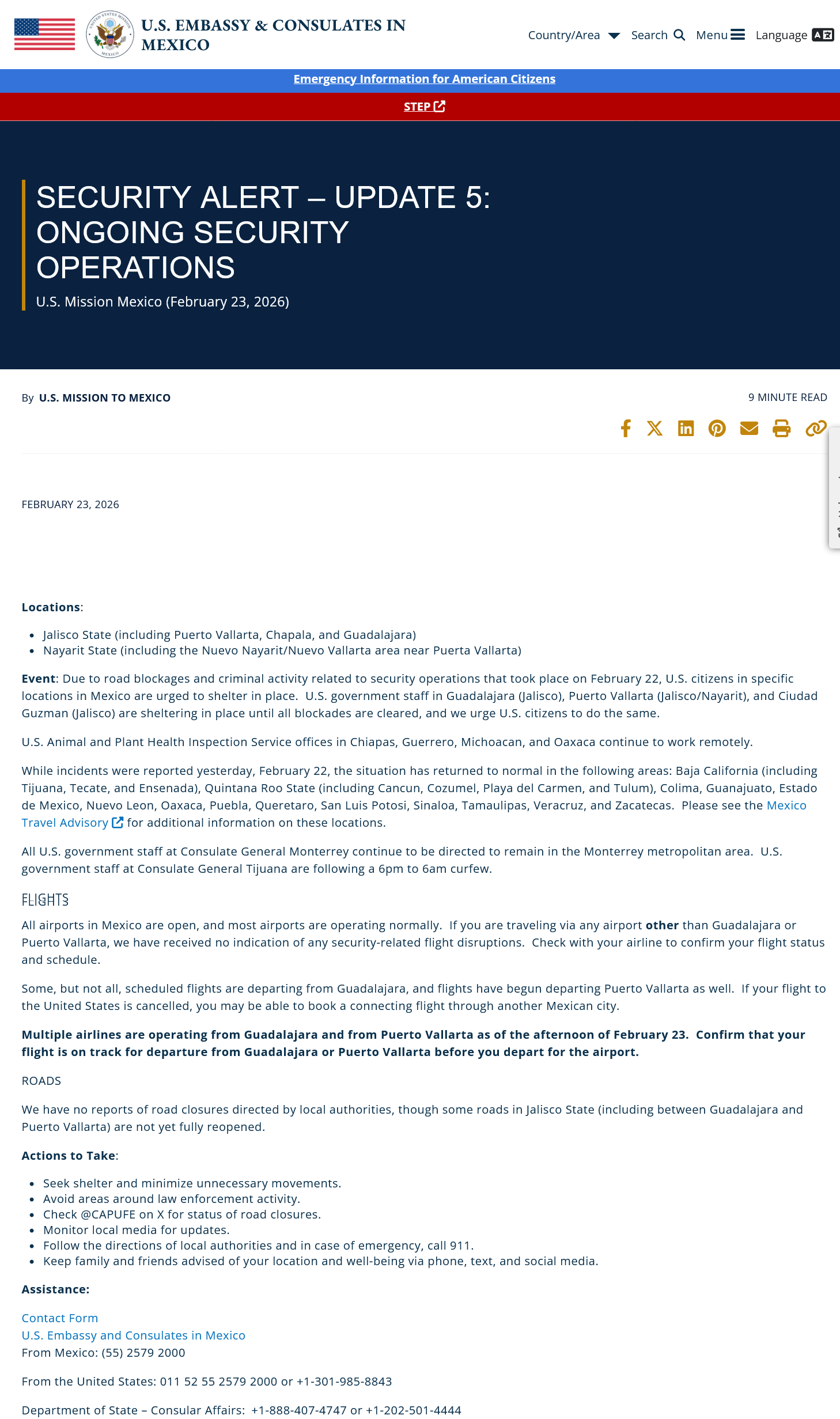
The February 23 Update 5 from the U.S. Mission indicates some flights have resumed in Puerto Vallarta and Guadalajara while most other Mexican airports function normally.
U.S. government personnel in Guadalajara (Jalisco), Puerto Vallarta (Jalisco/Nayarit), Chapala (Jalisco), Nuevo Vallarta (Nayarit), Tijuana (Baja California), parts of Chiapas, and parts of Michoacán follow identical measures. Travelers in these areas should remain indoors, monitor local developments, and limit non-essential movement.
Airlines continue to adjust schedules; passengers must confirm flights directly with carriers before traveling to airports. Conditions have stabilized in Quintana Roo State (including Cancún, Cozumel, Playa del Carmen, and Tulum), Baja California (including Tijuana, Tecate, and Ensenada), Sinaloa, Tamaulipas, Colima, Guanajuato, Estado de Mexico, Nuevo Leon, Oaxaca, Puebla, Queretaro, San Luis Potosi, Veracruz, and Zacatecas.
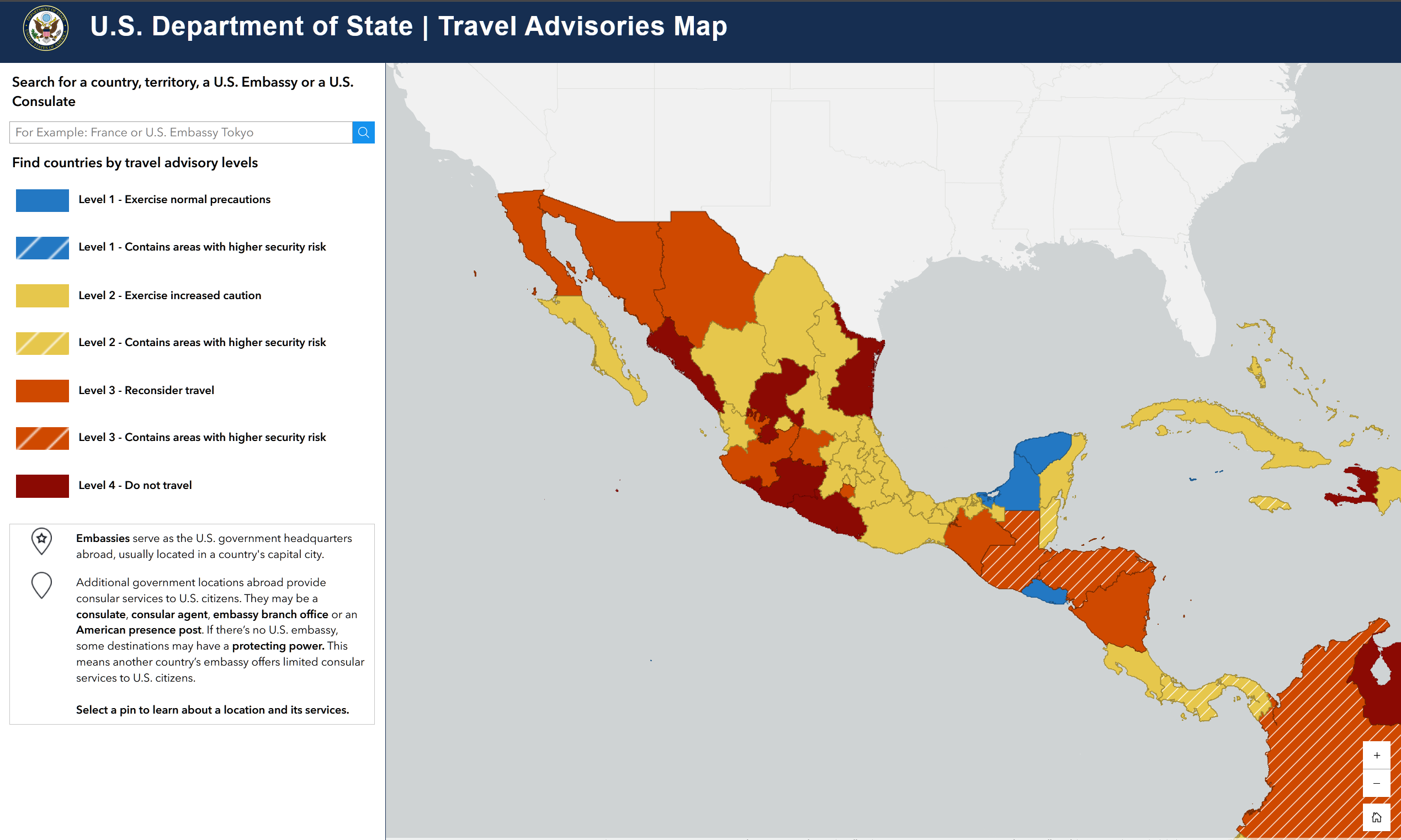
No security-related disruptions affect these areas. The overall Mexico Travel Advisory remains at Level 2: Exercise Increased Caution, with higher risk designations in the affected states.
Key Developments and Security Operations
Security operations by Mexican authorities, linked to the reported killing of Jalisco New Generation Cartel leader Nemesio “El Mencho” Oseguera Cervantes on February 22, produced road blockades and related activity in targeted regions.
The U.S. Mission issued successive alerts directing shelter-in-place protocols. Taxis and rideshare services remain unavailable in Puerto Vallarta, and some businesses closed temporarily.
U.S. citizens should seek secure shelter, avoid travel, monitor embassy alerts and local media, enroll in the Smart Traveler Enrollment Program for notifications, and prepare for possible ground and air delays.
U.S. Animal and Plant Health Inspection Service offices in Chiapas, Guerrero, Michoacan, and Oaxaca continue to work remotely.
Assessment: Operations remain localized to western and southern states following the reported cartel leader killing, with stabilization in multiple additional states providing a measurable indicator of recovery patterns. Road clearance and crew availability in Jalisco and Nayarit hubs will determine whether disruptions spread or resolve within the next 24-48 hours.
Flight Status and Airport Operations
Puerto Vallarta International Airport and Guadalajara Airport experienced disruptions, but multiple airlines are operating from both as of the afternoon of February 23. The Embassy coordinates with carriers on recovery timelines.
All other Mexican airports report normal operations with no security-linked closures outside the specified cities. Travelers must confirm flights directly with carriers before departing for airports.
Assessment: Crew availability and partial resumption constitute the immediate operational constraints in Puerto Vallarta and Guadalajara. If blockades clear and staffing returns to baseline levels, commercial tracking data would indicate flight volumes approaching normal within 24-48 hours; sustained gaps beyond that point would signal secondary logistical pressures.
Normalization in Major Tourist and Other Areas
Incidents from February 22 have resolved in Quintana Roo State (encompassing Cancún, Cozumel, Playa del Carmen, and Tulum), Baja California (including Tijuana, Tecate, and Ensenada), Sinaloa, Tamaulipas, Colima, Guanajuato, Estado de Mexico, Nuevo Leon, Oaxaca, Puebla, Queretaro, San Luis Potosi, Veracruz, and Zacatecas.
These zones operate under the general advisory but register no active security impacts. U.S. government staff at Consulate General Monterrey remain directed to stay in the Monterrey metropolitan area, and Tijuana consulate staff follow a 6 p.m. to 6 a.m. curfew.
Assessment: The contrast between stabilized areas across multiple states and restricted western zones illustrates the contained scope of current operations. Rapid return to routine in Quintana Roo and additional states after prior incidents serves as an observable benchmark for assessing recovery elsewhere once immediate conditions ease.
TravelGov, February 23, 2026: “Mexico - Feb. 23 Update: In Puerto Vallarta, flights continue to be disrupted due to availability of flight crews. The Embassy is in close contact with airlines to monitor their plans. All other airports in Mexico are open, and most airports are operating normally.”
U.S. Embassy Mexico Security Alert Update 5, February 23, 2026: “Due to road blockages and criminal activity related to security operations that took place on February 22, U.S. citizens in specific locations in Mexico are urged to shelter in place. ... We have no reports of road closures directed by local authorities, though some roads in Jalisco State (including between Guadalajara and Puerto Vallarta) are not yet fully reopened.”
U.S. Mission Mexico, February 22-23, 2026 series: Multiple alerts on ongoing operations, road blockages, and normalization in multiple states.
Full Report & Analysis
The full report includes expert analysis and risk assessment.
Full Report & Analysis →