Suicide Bombing at Khadijatul Kubra Shia Mosque in Islamabad Kills at Least 31 and Injures Over 169 During Friday Prayers
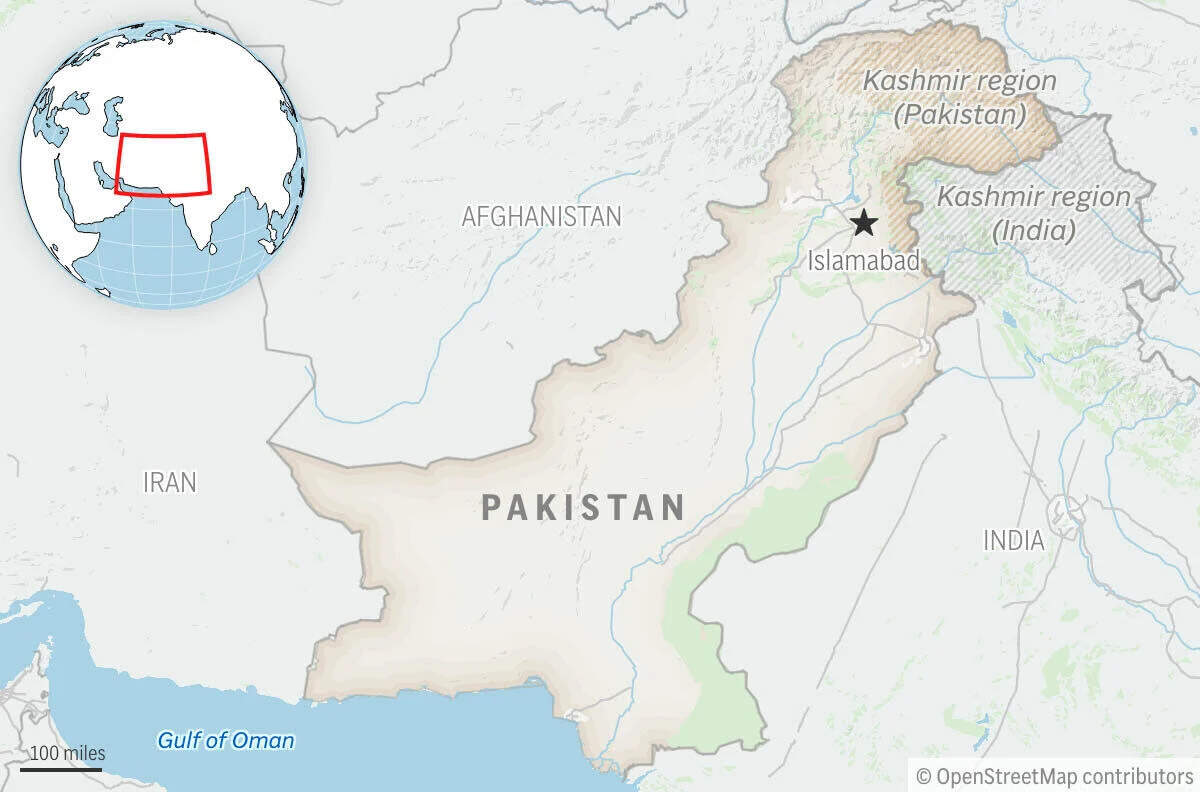
Credit: OpenStreetMap contributors. Data available under the Open Database License (ODbL). Cartography licensed as CC BY-SA.
ISLAMABAD, PAKISTAN - A suicide bomber detonated explosives at the entrance of the Khadijatul Kubra Mosque, a Shia place of worship in the Tarlai Kalan area of southeastern Islamabad near Shehzad Town, on February 6, resulting in at least 31 fatalities and over 169 injuries according to city officials and police sources.
The attack targeted worshipers gathered for Friday prayers, with the bomber intercepted by security personnel before entering the main hall. This incident marks one of the deadliest bombings in the capital in over a decade, prompting immediate emergency responses from local hospitals and security forces.
Police investigations identified the attacker as a foreign national affiliated with Fitna-al-Khawarij, an alias for militant groups like Tehreek-e-Taliban Pakistan, though no organization has formally claimed responsibility. The explosion caused structural damage to the mosque and adjacent buildings, intensifying the scene’s chaos.
Incident Details
The bomber approached the mosque’s main gate during the height of Friday congregational prayers, when the site was crowded with devotees. Security guards confronted the individual, leading to the detonation outside the prayer hall.
This intervention restricted the blast’s reach but caused severe harm from shrapnel and force to those nearby. Eyewitnesses described scattered bodies and rapid efforts to move the injured using available transport, including personal vehicles.
Rescue operations featured coordinated actions from police, emergency services, and medical personnel. Hospitals in Islamabad and neighboring Rawalpindi activated emergency protocols to manage the patient surge, many with critical blast injuries.
Authorities’ early evaluations verified the use of a suicide vest laden with explosives, exposing gaps in protective measures at religious venues.
Immediate Response and Medical Efforts
Local officials acted quickly, deploying 25 ambulances from Punjab province for evacuation support. The Punjab chief minister ordered regional hospitals to focus on treating victims from Islamabad.
Facilities handled cases involving blast trauma, such as fractures and internal damage, with multiple patients in intensive care units.
Government figures, including the interior minister, mandated increased security at vulnerable sites across the capital. Members of parliament from various parties criticized the violence, advocating for rapid accountability and stronger anti-terrorism strategies. The event halted regular operations in the vicinity, with roadways sealed for probes.
Full Report & Analysis
The full report includes expert analysis and risk assessment.
Full Report & Analysis →