Iran Designates EU Armies as Terrorist Entities, Warns of Disrupting Key Shipping Routes in Response to Potential U.S. Strikes
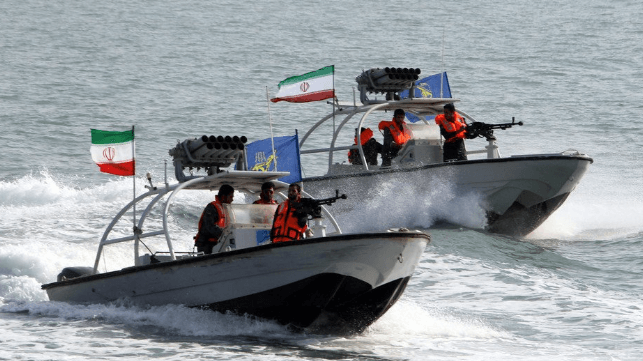
Credit: Iranian fast attack boats. Image credit: Courtesy Mehr News / CC BY SA 4.0
MIDDLE EAST - On February 1 Iran’s parliament designated European Union armies as terrorist organizations under Article 7 of its counter-terrorism law, with Speaker Mohammad Bagher Qalibaf directing the National Security Commission to expel European military attachés from Tehran.
This measure counters the EU’s January 29 classification of the Islamic Revolutionary Guard Corps as a terrorist entity, prompted by Iran’s suppression of protests and regional destabilization.
Concurrently, U.S. President Donald Trump disclosed on January 22 a significant naval force deployment toward Iran, featuring the USS Abraham Lincoln carrier group, to apply pressure for nuclear concessions.
The designation risks severing diplomatic ties, drawing from Iran’s 2019 reciprocal law against U.S. actions on the IRGC.
The EU’s decision equates the IRGC with entities like Daesh and Hezbollah, reflecting concerns over Iran’s aid to Russia in Ukraine and human rights violations. The U.S. armada, described as substantial, builds on 2025 operations like Midnight Hammer, which struck Iranian nuclear infrastructure, enhancing deterrence in the Gulf region.
Iran’s response intensifies demands for symmetry, with the IRGC characterizing the EU action as U.S.-influenced interventionism. This development occurs within cycles of escalating sanctions, where EU measures since 2023 have targeted IRGC officials for abuses.
Iranian parliament member Salar Velayatmadar stated that U.S. strikes on critical infrastructure would lead Iran to disrupt key waterways, including the Strait of Hormuz, Bab al-Mandab, and Suez Canal.
This warning highlights Iran’s readiness for significant retaliation, potentially rendering regional shipping routes insecure.
These events reflect interconnected tensions, with Iran’s measures possibly aimed at bolstering domestic support under external pressures. The naval deployment contributes to volatility in the Gulf, where shipping lanes face increased threats from proxy forces.
Full Report & Analysis
The full report includes expert analysis and risk assessment.
Full Report & Analysis →